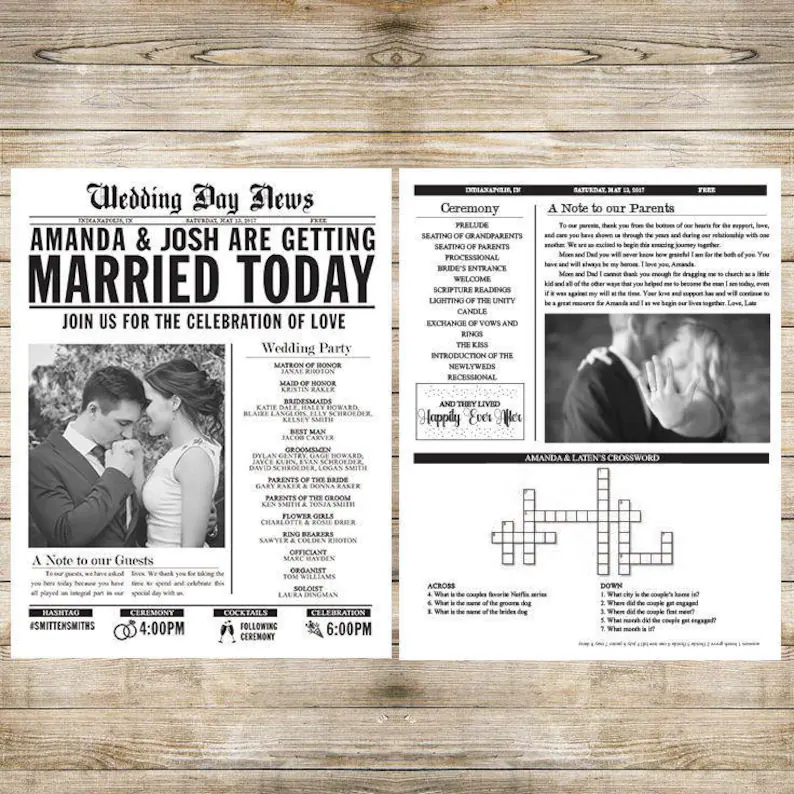
If you are planning your wedding ceremony, one of the first questions you may have is simple: What actually happens during the ceremony, and what order does everything happen in?
After more than 35 years of planning weddings and events, I can tell you that understanding the ceremony order ahead of time makes a big difference. Couples are more relaxed at the rehearsal, the wedding party knows what to expect, and everyone involved can focus on the meaning of the ceremony instead of wondering what happens next.
The good news is that a wedding ceremony usually follows a fairly simple structure. You can use the traditional order as your starting point and then adjust it to fit your relationship, family, culture, religion, and personality.
Here is the traditional wedding ceremony order, followed by a step-by-step explanation of what happens during each part.
This post contains affiliate links. I earn a commission on purchases made through these links at no additional cost to you.
Wedding Ceremony Order at a Glance
Most ceremonies follow a similar structure. While details may vary, the typical order of a wedding ceremony looks like this:
- Prelude and guest seating
- Processional
- Welcome and opening remarks
- Declaration of intent
- Readings, prayers, or special ceremony elements
- Officiant’s address
- Exchange of vows
- Exchange of rings
- Unity ceremony, if desired
- Pronouncement of marriage
- First kiss
- Recessional
Not every wedding includes every step. Readings, unity ceremonies, and other special elements are optional, and the order can be adjusted.
If you need help planning the ceremony itself, see my complete guide to planning a wedding ceremony.
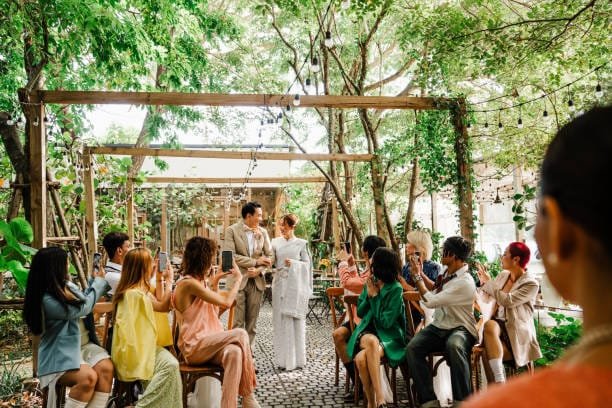
The Traditional Wedding Ceremony Order Explained
1. Prelude and Guest Seating
The prelude is the music played while guests arrive and take their seats.
This usually begins about 15 to 30 minutes before the ceremony. The music creates the atmosphere for the ceremony while guests find their seats and the wedding party prepares for the processional.
If you are using live musicians, make sure they know exactly when the prelude ends and the processional music begins.
The detail couples most consistently miss is giving the musicians a specific start and end cue — not just a time. I always recommend the officiant or a designated coordinator give a physical signal to the musician when it is time to transition from prelude to processional, because ceremony timing rarely runs exactly on schedule.
2. Processional
The processional is the formal entrance into the ceremony.
There is no single required processional order, but a traditional wedding may include:
- Officiant takes their place
- Grandparents are seated
- Parents are seated
- Groom or partner enters
- Bridesmaids and groomsmen enter
- Maid or matron of honor and best man enter
- Flower girl and ring bearer enter
- Bride or partner enters
Modern weddings often change this order.
One partner may walk in with both parents. Each partner may enter separately. The couple may walk down the aisle together. Children or other family members may participate.
There is no reason to follow a traditional processional simply because it is traditional.
Choose an entrance that feels comfortable for your family and your relationship.
The processional element I spend the most time on at every rehearsal is walking pace. Most people walk significantly faster than they realize when they are nervous, and a rushed processional robs the couple of one of the most visually impactful moments of the entire day. I tell every wedding party to walk at half the speed they think is natural.
3. Welcome and Opening Remarks
Once everyone is in place, the officiant welcomes the guests and officially begins the ceremony.
The opening may include:
A welcome to family and friends
An acknowledgment of the couple
A brief statement about marriage
A thank-you to the guests for being present
A short explanation of why everyone has gathered
This part should set the tone without taking too long.
4. Declaration of Intent
The declaration of intent is the part of the ceremony where the couple formally states their intention to marry.
This is often the familiar:
“Do you take this person to be your spouse?”
followed by:
“I do.”
The exact wording depends on the ceremony, officiant, religion, and applicable legal requirements.
Do not assume that every state or religious tradition has exactly the same legal requirements. Your officiant should make sure the ceremony includes whatever is required where you are getting married.
5. Readings, Prayers, or Special Ceremony Elements
This is where you can add personal meaning to the ceremony.
You might include:
A favorite poem
A meaningful passage from literature
A religious reading
A prayer
A song
A family tradition
A cultural tradition
A reading by a family member or close friend
Keep in mind that more is not always better.
One meaningful reading that lasts two or three minutes may have much more impact than several long readings.
If someone other than the officiant is participating, make sure they know where to stand, when they will be called forward, and whether they need a microphone.
After three decades of attending ceremonies, the readings I have watched land most powerfully are the short ones. A poem or passage that runs two minutes creates a moment of genuine stillness. A reading that runs six minutes loses the room by the third minute, regardless of how beautiful the words are.
6. Officiant’s Address
The officiant usually gives a short message about the couple, marriage, love, commitment, or the meaning of the day.
This may be called an address, sermon, homily, or ceremony message depending on the type of ceremony.
This is a wonderful opportunity to make the ceremony personal.
An experienced officiant will usually connect the message to the couple rather than simply giving a generic speech about marriage.
7. Exchange of Vows
The vows are the promises the couple makes to one another.
Couples may choose traditional vows, repeat vows after the officiant, or write their own. For a complete guide to writing personal vows and wedding speeches, the Wedding Vows and Speeches guide covers the process step by step.
If you are writing personal vows, talk with your officiant about the length ahead of time.
One of the biggest mistakes I see is waiting until the last minute to decide how long the vows will be. If one person speaks for one minute and the other speaks for ten, the ceremony can suddenly feel very unbalanced.
Keep your vows meaningful, personal, and reasonably concise.
8. Exchange of Rings
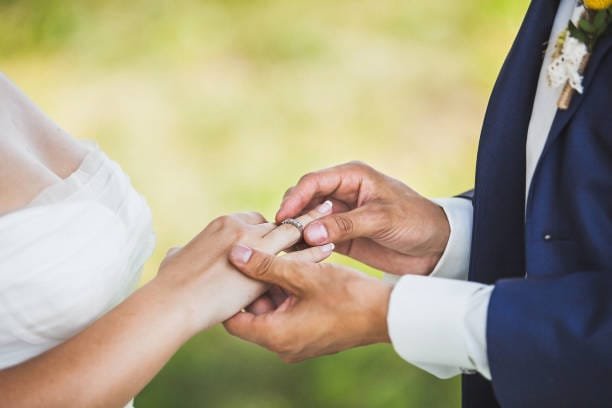
After the vows, the couple typically exchanges rings.
The officiant may explain the symbolism of the rings and then ask each partner to place the ring on the other’s finger.
You may repeat a traditional phrase, use a short ring vow, or simply say something meaningful to each other.
Before the wedding day, make sure the rings are with the correct person and that the best man, maid of honor, or whoever is responsible for them knows exactly when they will be needed.
One of the most overlooked rehearsal details is confirming exactly which finger the ring goes on and which hand, since traditions vary. More practically, I always ask the couple to practice the ring placement during the rehearsal — not because it is difficult, but because doing it once in advance means their hands are steady and familiar with the motion when it matters on the day.
9. Unity Ceremony
A unity ceremony is completely optional.
Some couples include:
A unity candle
A sand ceremony
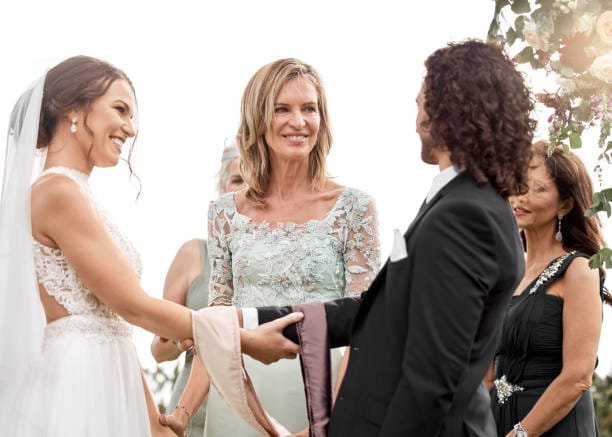
Handfasting
Planting a tree
Blending another meaningful item
A cultural or family ritual
These ceremonies can be especially meaningful when they represent the joining of two families or cultures.
If you want a shorter ceremony, this is also one of the easiest elements to skip.
10. Pronouncement of Marriage
After the vows and rings, the officiant formally pronounces the couple married.
This is one of the most anticipated moments of the ceremony.
The wording varies depending on the officiant, ceremony, and legal requirements, but it may be as simple as:
“I now pronounce you married.”
Your officiant should make sure the ceremony includes the language and legal elements required for your marriage.
11. The First Kiss
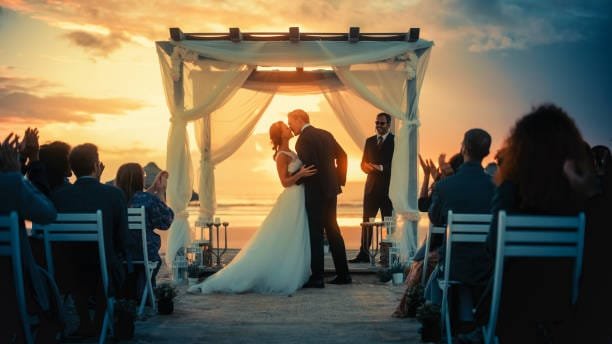
The first kiss usually follows the pronouncement.
This is the moment when the ceremony shifts from the formal portion into celebration.
Your officiant should give you a clear cue so you know when to turn toward each other.
It sounds simple, but this is exactly the kind of small detail that should be discussed at the rehearsal.
12. Recessional
The recessional is the couple’s exit from the ceremony.
The newly married couple usually leaves first, followed by the wedding party.
The exact order can vary depending on the processional and the ceremony setup.
Choose music that feels celebratory and make sure your musicians or DJ know exactly when to begin it.
Traditional Wedding Processional Order: Who Walks Down the Aisle First?
The processional is one of the parts of the ceremony that couples ask about most often.
A traditional processional may look like this:
- Officiant takes their place
- Grandparents are seated
- Parents are seated
- Groom or partner enters
- Groomsmen and bridesmaids enter
- Best man and maid of honor or matron of honor enter
- Ring bearer and flower girl enter
- Bride or partner enters last
But this is only a starting point.
You can change the order to include stepparents, children, grandparents, close friends, or other important people.
You can also have both partners walk down the aisle, enter from opposite sides, or walk together.
The best processional is the one that makes sense for you.
How Long Does a Wedding Ceremony Usually Last?
Most non-religious wedding ceremonies are relatively short.
A simple ceremony may last about 15 minutes.
A typical ceremony with readings, personal vows, and a few additional elements may run about 20 to 30 minutes.
Religious ceremonies can be considerably longer depending on the traditions involved.
The important thing is not to choose a length simply because you think a wedding ceremony is supposed to last a certain amount of time.
Talk with your officiant about the feeling you want. A short ceremony can be beautiful and meaningful, while a longer ceremony can work well when the additional traditions have genuine meaning for the couple.
My general guidance is that outdoor summer ceremonies should aim for the shorter end of the range — fifteen to twenty minutes — because guest comfort in heat becomes a factor that no amount of beautiful words can fully overcome. Indoor ceremonies have more flexibility.
Civil Wedding Ceremony Order
A civil wedding ceremony is generally simpler than a religious ceremony.
A typical civil ceremony may include:
Processional
Welcome
Declaration of intent
Short address
Vows
Ring exchange
Pronouncement
First kiss
Recessional
Some civil ceremonies are only a few minutes long, while others are personalized and closer to a traditional wedding ceremony.
If you are having a courthouse wedding, elopement, or simple civil ceremony, ask your officiant or local authority what legal requirements apply to your marriage.
Religious Wedding Ceremony Differences
Religious wedding ceremonies often follow a similar basic structure but include traditions specific to the faith.
For example, a Christian ceremony may include scripture readings, prayers, or communion.
A Jewish ceremony may include traditions such as the ketubah, seven blessings, and breaking the glass.
A Catholic wedding may include a full Mass.
Other faiths have their own traditions, prayers, readings, and ceremonial requirements.
If you are planning a religious wedding, your officiant or religious leader should be your primary resource for determining the appropriate order.
How Couples Can Personalize Their Wedding Ceremony
Your ceremony does not have to look exactly like anyone else’s.
You can personalize it by:
Writing your own vows
Choosing meaningful readings
Including children
Honoring parents or grandparents
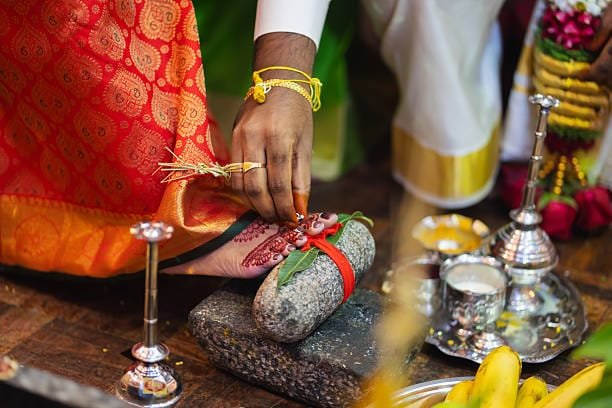
Including cultural traditions
Including religious traditions
Walking down the aisle together
Having both partners enter separately
Adding a unity ceremony
Having a friend or family member participate
Choosing meaningful music
The traditional ceremony order is a framework, not a rulebook.
Sample Wedding Ceremony Order
If you want a simple ceremony outline to give to your officiant, wedding party, or coordinator, this is a good starting point:
Prelude music and guest seating
Processional
Welcome and opening remarks
Declaration of intent
Reading or prayer
Officiant’s address
Exchange of vows
Exchange of rings
Unity ceremony, if desired
Pronouncement of marriage
First kiss
Recessional
This simple structure works well for many secular and semi-traditional weddings. Your officiant can adjust it based on your ceremony style and any religious, cultural, or legal requirements.
Wedding Ceremony Planning Tips From a Wedding Planner
After decades of working with weddings, I have learned that the ceremony itself is usually not what causes problems.
The problems usually happen because nobody clearly communicated what was supposed to happen next.
Here are the details I recommend confirming before the rehearsal.
The most consistent finding across all my years planning ceremonies is that the couples who seem most relaxed and present during their ceremony almost always had a very thorough rehearsal the evening before. The rehearsal removes the logistical uncertainty so the ceremony itself can hold only emotion and meaning.
Give Everyone a Written Ceremony Order
Do not rely on everyone remembering what you discussed at the rehearsal.
Give the officiant, wedding party, musicians, coordinator, and anyone participating in the ceremony a simple written outline.
Confirm Every Music Cue
Make sure everyone knows which song is used for the processional and exactly when it begins.
If there are multiple processional songs, identify who signals the musician or DJ when it is time to change.
Tell Readers Where to Stand
A reader should know where to go, when to walk forward, whether there is a microphone, and where to return afterward.
Rehearse the Processional
The processional deserves more attention than most couples realize.
Practice walking speed, spacing, where everyone stands, and what happens when the final person reaches the front.
Keep the Couple Out of the Logistics
On the wedding day, you should not be answering questions such as:
“Where does this person stand?”
“When do we play the next song?”
“Who is holding the rings?”
“Who tells the reader to go?”
Those responsibilities should belong to your coordinator, officiant, wedding party, or another designated person.
Your job is to be present and enjoy the ceremony.
Create a wedding registry at MyRegistry.comFrequently Asked Questions About Wedding Ceremony Order
The processional comes first in a wedding ceremony. During the processional, the officiant and wedding party walk down the aisle, followed by the couple. Once everyone reaches the altar, the officiant begins the ceremony with opening remarks.
In many traditional ceremonies, the vows come before the ring exchange. However, the order can be changed if it works better for the couple and officiant.
The exact processional order varies, but the officiant typically takes their place first, followed by family members and the wedding party. The final entrance is traditionally the bride or partner, although modern couples often choose different arrangements.
Many secular wedding ceremonies last approximately 15 to 30 minutes. Religious ceremonies can be longer depending on the traditions included.
No, a unity ceremony is optional. Many couples include symbolic rituals like a unity candle or sand ceremony, but plenty of weddings skip this step and move directly from the ring exchange to the pronouncement of marriage.
Yes. The traditional wedding ceremony order is a guideline, not a requirement. Many couples rearrange elements to suit their style, faith, or family situation. The most commonly moved elements are readings, which can appear in multiple places, and the unity ceremony, which some couples place before the vows rather than after. Work with your officiant to find an order that flows naturally for your specific ceremony.
The recessional is the joyful exit at the end of the ceremony. The newly married couple walks back down the aisle together first, followed by the wedding party in reverse order from the processional. Guests then exit in an order directed by ushers, typically from the front rows first. Recessional music is traditionally upbeat and celebratory.
Yes, a rehearsal is strongly recommended for every wedding ceremony regardless of size or complexity. Walking through the ceremony once, with the officiant guiding each moment, dramatically reduces anxiety on the wedding day and ensures everyone knows exactly where to stand, when to move, and what to expect. Even a simple 30-minute rehearsal the evening before makes a meaningful difference.
Final Thoughts
Knowing the traditional wedding ceremony order makes planning much easier, but you do not have to follow tradition perfectly.
Use the traditional structure as your starting point, then make thoughtful changes that reflect your relationship, family, culture, and beliefs.
The most successful ceremonies are not necessarily the longest or the most elaborate. They are the ones where everyone knows what is happening, the couple feels comfortable, and the ceremony feels like it belongs to them.
After more than 35 years of working in weddings and events, my best advice is simple: plan the logistics carefully so you can forget about the logistics when the ceremony begins.
Once you walk down that aisle, be present. This is one part of your wedding day you will never get to do twice.
When it is time to plan the honeymoon, this guide includes a complete checklist.
Chris Ramsay is a wedding planner with over 35 years of experience in hospitality, country clubs, and event planning. She shares practical wedding advice, budget-friendly ideas, and real-world tips to help couples plan stress-free weddings at Well Chosen Weddings. Learn more about her on her about page.
Make Wedding Planning Easier
Planning a DIY wedding means keeping track of more than decorations. You also have a budget to manage and a wedding day to organize. I created these shortcuts to help you with your wedding planning.
Wedding Budget Tracker
Keep your wedding expenses organized and see exactly where your money is going.
Wedding Day Timeline
Keep your wedding day organized so you know what needs to happen and when.