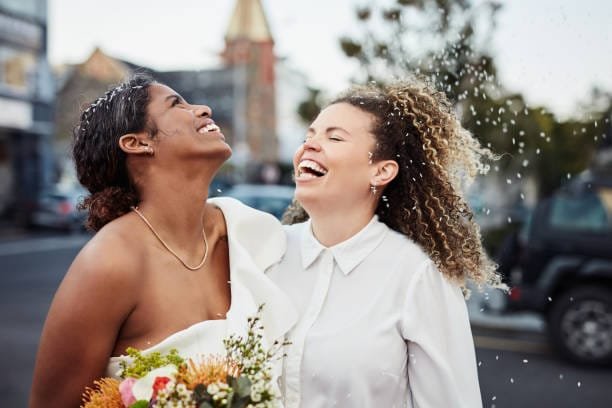
Of everything that happens on a wedding day, the words are what people remember longest.
Not the flowers. Not the venue. Not the music during the recessional. The words. What the couple said to each other when they faced one another at the altar. What the maid of honor said that made the whole room laugh and then cry in the span of sixty seconds. What the best man said that made the groom look at the floor and try not to lose it.
In 35 years of standing at the back of wedding venues and watching ceremonies unfold, I have seen vows that made entire rooms fall silent. I have heard speeches that stopped time. And I have also seen couples freeze at the altar because nobody told them how to prepare, and heard speeches that went on so long the caterer had to delay dinner service.
The difference between those two outcomes is almost always preparation.
This guide covers everything you need to write wedding vows and speeches that land. Whether you are the couple writing your own vows, the maid of honor drafting your toast, or the best man trying to figure out where to start, this is your complete guide from someone who has watched it all unfold hundreds of times.
This post contains affiliate links. I earn a commission on purchases made through these links at no additional cost to you.
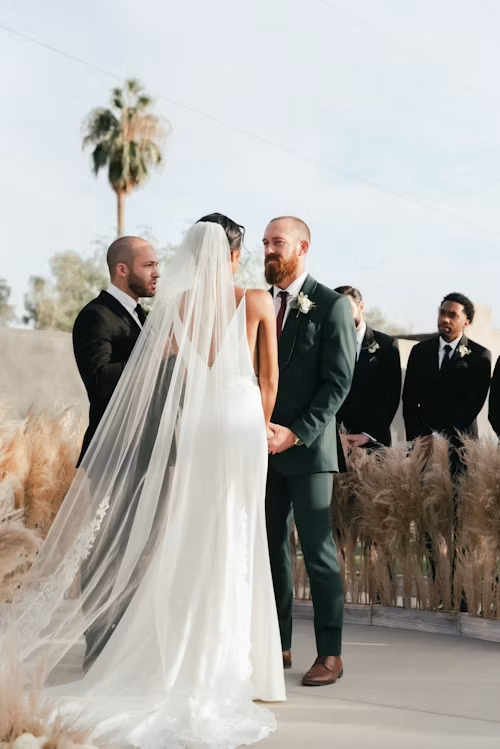
For a full understanding of where vows fit within the ceremony, read the complete wedding ceremony order guide on this site. Wedding Ceremony Order: A Complete Step-by-Step Guide.
Part One: How to Write Your Own Wedding Vows
Should You Write Your Own Vows or Use Traditional Ones?
This is the first question couples ask, and the honest answer is that both are completely right.
In my experience, the majority of couples today choose to write their own vows rather than use traditional ones — a shift I have watched accelerate steadily over the past decade. That said, traditional vows remain deeply meaningful and completely appropriate. Both are right.
The question to ask yourselves is this: is there something specific you want to say to this person, in front of these people, that only you could say? If the answer is yes, write your own vows. If the answer is that the traditional vows capture exactly what you want to promise, use them without apology.
If you are uncertain, there is a middle path: use a traditional framework and add one or two personal lines. Many couples find this approach takes the pressure off while still creating a ceremony that feels uniquely theirs.
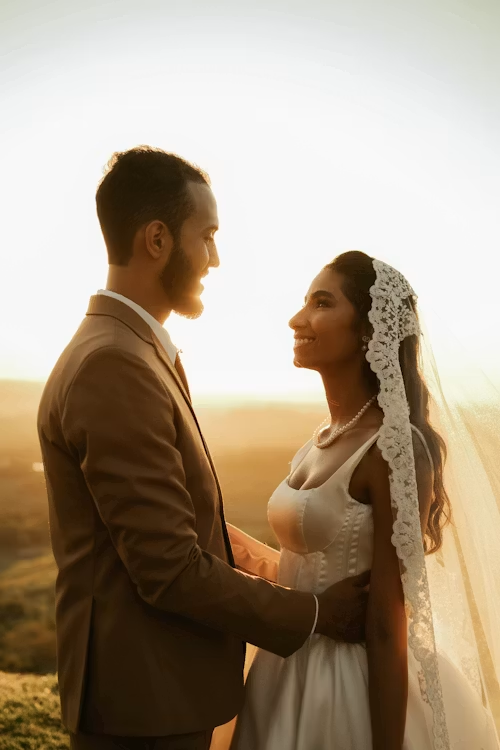
If you are still looking for that perfect wedding dress, this post cover affordable wedding dresses.
How Long Should Wedding Vows Be?
This is where most couples who write their own vows go wrong. They write too much.
The ideal length for personal wedding vows is one to two minutes per person when spoken aloud. That translates to roughly 150 to 250 words on the page. Long enough to be meaningful. Short enough that your voice does not break and your guests stay present.
Anything over three minutes per person starts to feel long in the moment, no matter how beautifully written. The ceremony has built to this point. The emotion in the room is high. Brevity at this moment is not a limitation; it is a gift.
Stay Organized Throughout Your Wedding Planning Journey
Before you continue, don’t forget to grab free access to my growing Wedding Planning Library. You’ll find printable checklists, budget worksheets, timelines, vendor planners, and more.
The Structure That Works
Think of your vows in three movements: the past, the present, and the future. Share how your love story began. Acknowledge who you are as a couple today. Then look forward and make your promises.
That structure, applied to your specific relationship and spoken in your own voice, is all you need. You do not require poetic language, literary flair, or a perfectly crafted opening line. You require honesty.
Here is how to build each section:
The past: Start with something specific. Not “when I first met you” in a general way, but a particular moment. The specific detail that only you would remember. The thing you knew then that turned out to be true. Including one or two specific memories gives your vows narrative depth and helps guests understand your relationship. Choose stories that reveal something significant about your partnership, how you support each other, overcome challenges, or find joy together.
The present: This is where you acknowledge what this person means to you right now. Not in sweeping abstractions, but in the quiet, specific ways they show up in your daily life. The things they do that nobody else would think to notice.
The future: This is where your promises live. Make them real. Not just “I promise to love you always” — though that is in there — but the particular promises that are true to your relationship. The specific ways you intend to show up for this person for the rest of your life.
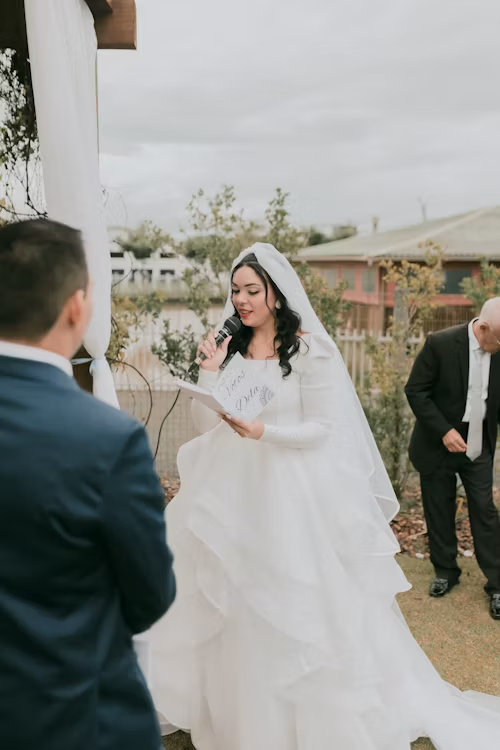
Vow Writing Prompts to Help You Start
If you are staring at a blank page, these questions will help you find what you actually want to say.
When did I first know this was the person I wanted to marry? What is something about this person that I have never told them out loud? What does our life together look like on an ordinary Tuesday, and why does that make me happy? What has loving this person taught me about myself? What am I most looking forward to about the life we are building? What do I want them to know they can always count on me for? What do I admire most about them that I want to say in front of everyone we love?
Write your answers to these questions freely without worrying about structure or word choice. The raw material is in those answers. The vows come from there.
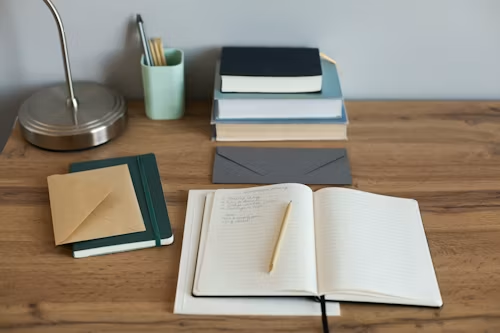
Things to Avoid When Writing Your Own Vows
Strong wedding vows stay focused on appreciation and future intention. They should not attempt to retell your entire relationship or rely heavily on inside jokes that exclude most of the room.
A few specific things to avoid:
Inside jokes that only two people in the room will understand. One is charming. A speech built around them is alienating.
Humor that comes at your partner’s expense. Even gentle teasing can land wrong in the emotion of the moment. Save the roasting for the rehearsal dinner.
Promises you cannot keep. Vows that include “I will never go to bed angry” or “I promise to always put you first” sound beautiful and set up expectations no real marriage can sustain. Be honest about what you can genuinely commit to.
Reading too fast. This is the most common delivery mistake. Practice out loud, multiple times, more slowly than feels natural. Most people speak faster when nervous, so practice reading slowly and deliberately and factor in pauses for emotion; you will likely need to stop a few times to compose yourself, especially when you make eye contact with your partner.
Should You Coordinate Vows With Your Partner?
While many couples choose to surprise each other with their personalized wedding vows, it is always a good idea to sync up on theme, tone, and overall delivery. Vows should match in tone and vibe; you do not want them to clash.
Coordinate the broad strokes. Decide together whether your vows will be primarily serious, primarily lighthearted, or a blend. Agree on approximate length. Keeping the final words a surprise is still completely possible within those guardrails, and it avoids the painful situation where one partner delivers a heartfelt three-minute vow, and the other responds with a funny two-liner that lands like a punch in the gut.
Where to Keep Your Vows During the Ceremony
Please do not read your vows off your phone.
A beautiful vow book or card is far more elegant, photographs infinitely better, and removes the risk of a notification, a dimmed screen, or a battery situation derailing the most important two minutes of your ceremony.
A quality vow book is one of the most photographed items from any ceremony. Amazon has beautifully personalized options with your names, wedding date, or a custom phrase on the cover.
Shop Amazon for personal vow books.
Part Two: How to Write a Maid of Honor Speech
What a Maid of Honor Speech Should Do
A great maid of honor speech does three things. It introduces you and your relationship with the bride to guests who may not know you. It makes the room laugh and then feel something real. And it ends with a toast that brings everyone together.
It does not need to be a biography of the friendship. It does not need to cover every significant moment of the bride’s life. It does not need to be perfect.
It needs to be true, warm, and brief enough that guests are still fully present when you raise your glass.
How Long Should a Maid of Honor Speech Be?
The sweet spot for a maid of honor speech is around three to five minutes. That is long enough to tell a meaningful story, share a few laughs, and end with a heartfelt toast, but short enough to keep everyone’s attention. Anything over six minutes usually starts to lose energy in the room, while anything under two minutes can feel rushed.
In practical terms, aim for 350 to 500 words. Read it aloud and time yourself; do not estimate. People consistently underestimate how long their speech runs, especially when they add pauses for laughter or emotion on the actual day.
The Structure of a Great Maid of Honor Speech
Opening — 30 seconds: Introduce yourself and your connection to the bride, and thank the guests for being there.
Stories — two to three minutes: Share one or two great moments about the bride or the couple.
Closing — 30 to 60 seconds: Offer your wishes and make the toast.
That is the entire structure. Simple and proven. Here is how to execute each part.
Opening: Keep it brief. Your name, how you know the bride, and one sentence that tells the room why you are the right person to be standing there. Do not spend three minutes on your introduction. Thirty seconds is plenty.
The stories: This is the heart of the speech. Choose one story — two at most — that reveals something true about the bride’s character, her relationship with her partner, or your friendship. Specific beats the general every time. “Sarah is the most loyal person I know” is forgettable. A story that shows her loyalty in a specific moment is something the room remembers when they drive home.
Acknowledge the partner meaningfully. The speech should celebrate the couple, not just the bride. Try to make it about both of them and not just about whichever party you are more associated with. A line or two about what the couple brings out in each other, or a moment where you saw clearly that this partnership was the right one, lands beautifully.
The closing and toast: End with genuine well-wishes — not generic ones — and then invite the room to raise their glasses. Write your toast to be from everyone in the room rather than just from you. “We wish you a life filled with love and laughter” lands differently and more warmly than “I wish you.”
What to Avoid in a Maid of Honor Speech
Do not share anything the bride would not want shared in front of her grandmother, her boss, or her future in-laws. This rule catches most of the problematic content before it becomes a problem.
Do not read the entire speech off the page with your head down. Practice enough that you can look up regularly, especially during the punchlines and the toast. Eye contact with the couple and with the room is what makes a speech feel alive rather than recited.
Do not make it about yourself. The speech is about the bride and her partner. Your feelings about the friendship matter, but they should support the story of the couple rather than become the story.
Genuine warmth will always outlast forced jokes. Do not try to be funny just for the sake of it. Let that happen naturally.
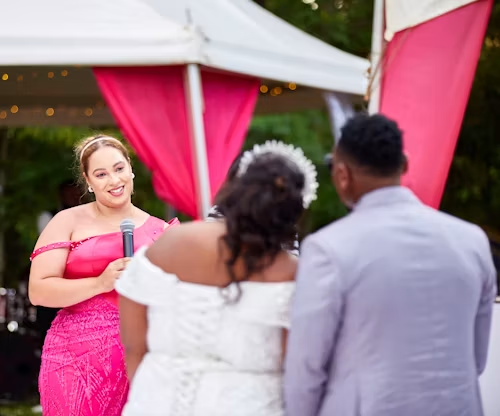
Part Three: How to Write a Best Man Speech
What Makes a Best Man Speech Great
The best man’s speech has a slightly different energy from the maid of honor’s speech. It tends to lean a little more toward humor, a little more toward ribbing, but the best ones balance that warmth with genuine appreciation.
After 35 years of watching speeches from the back of the room, I can tell you what separates the memorable ones from the forgettable ones. It is not the jokes. It is the moment of genuine feeling underneath the humor. The speech that gets the room laughing and then surprises everyone by landing somewhere real is the one people talk about on the drive home.
Shop Etsy for personalized toasting glasses.
How Long Should a Best Man Speech Be?
The same standard applies here. Three to five minutes. No more than five under any circumstances.
I have seen best man speeches run twelve minutes. I have watched the energy drain from a room in real time. I have seen the caterer hovering at the kitchen door. I have seen the bride’s smile become fixed. Five minutes is generous. Three is often better.
The Structure of a Best Man Speech
Introduction: Your name, how you know the groom, and one sentence that establishes your credibility as the person who knows him best.
One or two stories about the groom: Choose stories that show his best qualities, loyalty, humor, the ways he loves the people in his life. Rather than just saying someone is wonderful, share the stories that demonstrate their best qualities. A story about a moment where you saw clearly that he was the kind of person who deserved this day will land better than three generic compliments.
The transition to the couple: This is where you shift from celebrating the groom to celebrating the partnership. A line or two about what the bride brings out in him, or the moment you knew this relationship was different, creates a genuine bridge.
The toast: End warmly, invite the room to raise their glasses, and keep the toast itself brief and sincere.
What to Avoid in a Best Man Speech
The same rules about embarrassing content apply here, perhaps more so. Do not risk embarrassing the couple by sharing drunken memories. Most of the guests were not there to experience it with you, so it is never as hilarious as you think it is. Stories that celebrate who the groom is will serve the moment far better than stories that celebrate who he used to be.
Part Four: Practical Tips That Apply to Everyone
Start Early and Write More Than You Need
Give yourself at minimum four to six weeks to write, revise, and practice. The first draft of anything — vows or speeches — is rarely the version you deliver. You need time to write, step away, come back with fresh eyes, and edit down to what is essential.
Write more than you think you need in the first draft. It is far easier to cut a speech that is too long than to expand one that is too short.
Practice Out Loud More Than You Think You Need To
Reading something silently and speaking it aloud are completely different experiences. Words that look clean on the page can sound awkward when spoken. Jokes that seem funny in your head may not land the way you expect. Pauses that feel natural in your mind may disappear entirely when you are nervous.
Practice in front of at least one real person before the wedding. Their reactions will tell you more in five minutes than a week of solo rehearsals.
What to Do With the Paper
Vows and speeches should be on paper or in a vow book, not on a phone. Keep the paper or vow book in a pocket, a purse, or handed off to someone trustworthy for the ceremony. Knowing it is there reduces anxiety even if you have memorized every word.
A small leather speech portfolio or quality notepad keeps pages organized and looks polished at the podium.
For more on the overall flow of your reception, including when speeches happen and how to time everything, read the wedding reception planning guide on this site. Wedding Reception Planning Guide.
For couples who are also finalizing their ceremony attire during this season, AW Bridal offers a wide selection of gowns suited for every wedding style and setting. Then add your AW Bridal banner.
Vow and Speech Comparison Guide
| Type | Ideal Length | Tone | Key Elements |
|---|---|---|---|
| Personal wedding vows | 1 to 2 minutes each | Heartfelt, personal | Past memory, present appreciation, future promises |
| Traditional vows | 1 to 2 minutes each | Formal, timeless | Standard exchange with officiant |
| Maid of honor speech | 3 to 5 minutes | Warm, often funny | Intro, one to two stories, toast |
| Best man speech | 3 to 5 minutes | Warm, often humorous | Intro, one to two stories, transition to couple, toast |
| Parent toast | 2 to 3 minutes | Warm, celebratory | Brief story, welcome to family, toast |
| Other wedding party | 1 to 2 minutes | Light, celebratory | Brief connection, well wishes, toast |
Frequently Asked Questions About Wedding Vows and Speeches
Personal wedding vows should run one to two minutes per person when spoken aloud, which translates to roughly 150 to 250 words on the page. This is long enough to be meaningful and short enough to stay emotionally focused. Anything over three minutes per person tends to feel long in the ceremony context, no matter how well written. Practice out loud and time yourself; most people are surprised by how short one minute actually is.
Most wedding professionals, and most couples who have done it, recommend reading from a vow book or card rather than memorizing. The emotional intensity of the ceremony makes memory unreliable even for people who have practiced extensively. Reading from a beautiful vow book is completely elegant and removes the risk of going blank at the most important moment of the day.
Start by answering questions rather than writing the vows directly. When did you first know this was the person you wanted to marry? What has loving them taught you about yourself? What specific moment in your relationship do you return to most often? What do you want them to know they can always count on from you? Write freely without worrying about structure. Your raw answers to those questions contain everything you need. The vows are in there — you just need to find them.
Three to five minutes is the professional standard for both. This length strikes the perfect balance between sharing a meaningful message and not risking the audience’s attention or delaying the wedding schedule. In practical terms, aim for 350 to 500 words and read it aloud timed; do not estimate. Anything over six minutes starts to lose the room, and most speeches run longer when delivered with pauses and emotion than they do in practice.
Never share anything the couple would not want shared in front of their grandparents, employers, or in-laws. Avoid stories that embarrass the couple, inside jokes that exclude most of the room, humor at the expense of either partner, and anything that centers your own feelings more than it celebrates them. Do not make promises on the couple’s behalf or offer unsolicited marriage advice. And never, under any circumstances, use a wedding speech to air unresolved personal grievances or make anyone in the room uncomfortable.
For vows, start four to six weeks before the wedding. This gives you time to draft, revise, and practice without rushing. For speeches, six to eight weeks is ideal; you want enough time to write multiple drafts and practice in front of someone whose feedback you trust. The worst speeches are always the ones written the night before the wedding when there is no time to refine or practice.
Absolutely. Traditional vows are used at the majority of weddings, and they are beautiful, meaningful, and timeless. There is nothing generic or impersonal about them; they carry the weight of everyone who has ever spoken them before you. The right vows are the ones that feel true to you as a couple, whether that means writing something entirely personal, using traditional language, or blending the two.
Final Thoughts
The words you speak on your wedding day will outlast almost everything else about it. The flowers will fade. The food will be eaten. The music will end. But the moment when two people face each other and say out loud, in front of everyone they love, what they are committing to, that stays.
Give those words the time and care they deserve. Write early. Revise honestly. Practice out loud. And when you are standing there, and your voice breaks a little, know that it should. That is not a mistake. That is the moment working exactly as it is supposed to.
Worried you’ll forget an important wedding photo? A good shot list can give you peace of mind, but an overly complicated one can eat into your wedding-day timeline. Here’s what I’d put on the list after years of wedding planning.
For everything that happens after the vows are spoken, read the complete wedding reception planning guide on this site. Wedding Reception Planning Guide. And for couples planning the full ceremony from processional to recessional, the wedding rehearsal guide will walk you through everything that needs to be practiced beforehand. Wedding Rehearsal Guide.
Chris Ramsay is a wedding planner with over 35 years of experience in hospitality, country clubs, and event planning. She shares practical wedding advice, budget-friendly ideas, and real-world tips to help couples plan stress-free weddings at Well Chosen Weddings. Learn more about her on her about page.