This complete wedding reception planning guide walks you through everything you need to plan a seamless celebration. After 35 years of planning weddings in ballrooms, country clubs, private estates, and backyard venues, I can tell you that the fundamentals remain constant regardless of setting: realistic budgeting, guest comfort, structured timing, and a layout that allows energy to flow naturally. Whether you are planning an intimate gathering or a full-scale reception for two hundred, this guide covers each stage of the process from venue selection through the final guest exit.
This guide contains affiliate links. I earn a commission from purchases made through these links at no additional cost to you.
If you follow this guide step by step, you will be able to plan your wedding reception with clarity and confidence.
Wedding Reception Planning Timeline: Step by Step From Start to Finish
Twelve to nine months before the wedding, secure your reception venue and catering. Popular venues often book more than a year in advance, especially during peak season. If your venue does not include catering, reserve your caterer and bar service early. Read this blog for more information on selecting your wedding venue.
Eight to six months before, finalize your estimated guest count and begin discussing layout options. Start selecting rentals, linens, and lighting direction.
Five to three months before, confirm menu selections and bar packages. Begin mapping out your wedding reception timeline and order of events. Read this blog on Food and Beverage Guidelines.
Two months before, create your seating chart and confirm floor plan details with your venue. This blog explains what not to do when creating your seating chart.
Two weeks before, submit your final guest count and review the complete reception timeline with all vendors.
A structured planning timeline prevents rushed decisions and ensures your wedding reception flows smoothly from start to finish.
For managing RSVPs and tracking your guest list digitally, WedSites offers a free wedding website platform that keeps all of your guest communication and seating logistics in one place.
How to Set a Realistic Wedding Reception Budget
Your wedding reception typically accounts for fifty to sixty percent of your total wedding budget. The largest portion is usually venue rental and catering, followed by bar service, rentals, entertainment, decor, and service charges.
Most couples spend between $100 and $250 per guest, depending on the location and service style. Always ask for a full breakdown, including tax, service charges, and gratuity, which can increase your total by twenty to thirty percent.
Planner insight: Food and beverage minimums are often misunderstood. Confirm whether your venue requires a minimum spend before tax and service charges.
For my full wedding budget guide and free budget planning worksheet.
If you are planning your wedding without a wedding planner, read this blog: How to Plan a Wedding without a Wedding Planner.
This blog will help make you aware of what to look out for when planning your wedding. Hidden Wedding Costs No One Tells You About.
How to Choose the Perfect Wedding Reception Venue
Choosing the right wedding reception venue affects guest comfort, budget flexibility, layout flow, and overall atmosphere.
When touring venues, evaluate realistic capacity with a dance floor, including tables and chairs, vendor restrictions, and weather backup plans. Ask for a sample reception floor plan for your estimated guest count.
A venue that technically seats 200 guests may feel crowded once you add a band, bar stations, buffet tables, and decor installations.
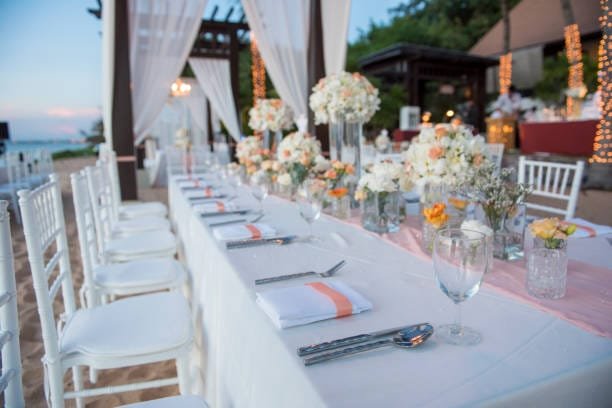
Wedding Reception Layout Ideas and Floor Plan Tips
A well-designed wedding reception layout keeps energy high and traffic flowing.
Center the dance floor whenever possible. Place the bar near high- traffic areas but not directly at the entrance. Position buffet tables away from tight walkways. Ensure guests have clear sight lines to the head table and dance floor.
Avoid overcrowding. Leave enough space between tables for servers and guests to move comfortably.
Thoughtful floor plan design improves guest experience more than expensive decor ever will.
When it comes time to plan the seating chart, read these blogs:
Wedding Seating Charts for Every Style
14 Wedding Seating Chart Mistakes Not to Make.
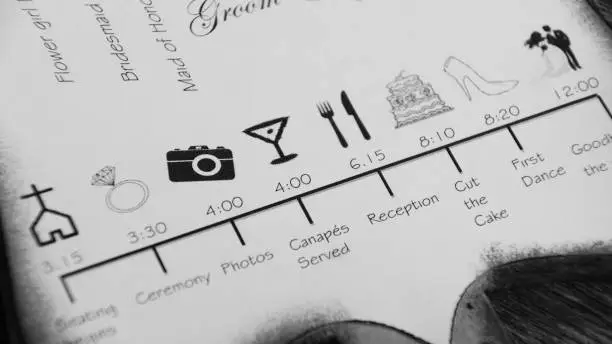
Sample Wedding Reception Timeline With Order of Events
Most traditional wedding receptions follow this order of events:
- Cocktail hour
- Grand entrance
- First dance
- Dinner service
- Toasts
- Parent dances
- Cake cutting
- Open dancing
- Last dance and exit
Spacing these events throughout the evening keeps the reception from feeling rushed. Avoid stacking too many formalities back-to-back. For advice on wedding appetizers for the cocktail hour, read this guide.
A well-structured wedding reception timeline allows guests to relax, eat, socialize, and enjoy the celebration naturally.
See how the wedding reception timeline fits in with the wedding day schedule as a whole. Read the Wedding Day Timeline Guide Here.
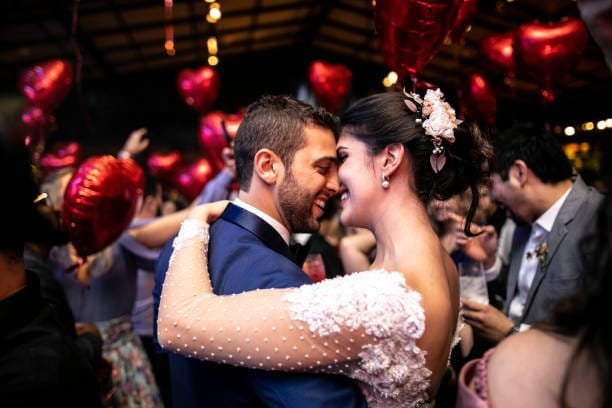
Wedding Reception Decor Ideas That Elevate Your Venue
Reception decor should enhance your venue rather than overwhelm it.
Focus on layered lighting, statement florals, thoughtful table settings, and cohesive signage. If you are sourcing your own decor, prioritize items that have visual impact, such as charger plates, table runners, candles, and custom signage.
Keep decor proportional to your space. Large installations can overwhelm smaller venues, while minimal decor may feel lost in expansive ballrooms.
This blog is all about decor ideas for under $500.
As you plan your wedding and select gifts for your gift registry. MyRegistry.com lets you connect all of your different store gift registries in one convenient location.
How Much Does a Wedding Reception Cost Per Guest
The cost per guest varies widely, but most couples can expect to spend between one hundred and two hundred fifty dollars per guest. Plated dinners typically cost more than buffet service due to staffing requirements.
Premium bar packages, specialty rentals, and elaborate decor increase per guest costs quickly. Understanding this number early helps you make informed guest list decisions.
Always calculate cost per guest, including tax and service charges for accuracy.
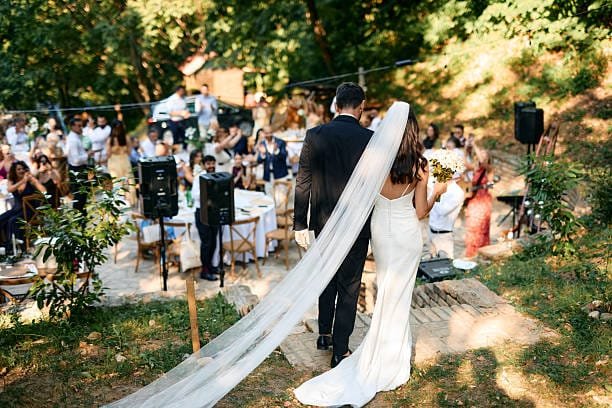
The Ultimate Wedding Reception Checklist
Before your reception day, confirm:
- Final guest count submitted
- Menu and bar selections approved
- Reception timeline finalized
- Seating chart printed
- Vendor arrival times confirmed
- Payments scheduled
- Emergency kit packed
Download the printable Wedding Reception Checklist to keep everything organized and on track.
When it comes time to shop for your wedding attire, AW Bridal is a popular choice because of its extensive inventory and lower prices.

Frequently Asked Questions About Wedding Reception Planning
Most couples begin planning their wedding reception twelve months in advance, especially if they are getting married during peak wedding season. The priority is securing your reception venue, since popular venues often book out one to two years ahead. Once your venue is secured, you can begin confirming catering, bar service, and entertainment. Six to eight months before the wedding is typically when couples finalize design elements, rental selections, and overall reception layout. Two to three months before the wedding, the focus shifts to final guest count, seating chart creation, and confirming your reception timeline with vendors. Starting early gives you more flexibility with vendor availability and helps reduce last-minute stress. A structured reception planning checklist can make this process significantly easier.
Wedding reception cost per guest varies based on location and service style, but most couples can expect to spend between one hundred and two hundred fifty dollars per guest. This estimate typically includes catering, bar service, rentals, and staffing. Plated dinners often cost more than buffet service due to staffing requirements. Premium bar packages, specialty rentals, and elaborate decor can also increase the per-guest cost significantly. When calculating cost per guest, remember to factor in tax, service charges, and gratuity. These fees can add twenty to thirty percent to your food and beverage total. Understanding your per-guest cost early helps you adjust guest count if needed to stay within budget.
Cocktail hour typically lasts sixty minutes. This provides enough time for guests to mingle, enjoy drinks, and sample appetizers while the couple finishes photos. If your guest count is large or bar lines tend to be long, you may want to extend the cocktail hour slightly to ensure guests are comfortable. However, extending beyond ninety minutes can cause dinner to feel delayed. Strategic bar placement and sufficient staffing help keep cocktail hour efficient and enjoyable without running overtime.
The most common wedding reception mistakes include underestimating food and beverage minimums, creating an overcrowded floor plan, and overloading the timeline with formalities. Another frequent issue is failing to consider guest comfort, such as insufficient seating during cocktail hour or long bar lines. Poor seating arrangements can also impact the overall energy of the reception. Guests who are seated with people they do not know may feel less engaged throughout the evening. Careful planning, clear vendor communication, and reviewing the full reception layout in advance can prevent these issues and create a much smoother event.
Most formal wedding receptions benefit from a seating chart. Assigned seating helps guests find their tables quickly and ensures balanced table groupings. It also allows you to plan table sizes accurately and avoid overcrowding. Buffet-style receptions may allow more flexibility, but even then, assigning tables rather than individual seats can improve flow and reduce confusion. A well-thought-out seating chart contributes significantly to guest comfort and overall reception success.
The traditional order of events begins with the cocktail hour, followed by the grand entrance of the wedding party and newlyweds. The couple typically shares their first dance, followed by dinner service. Toasts often occur during dinner or shortly after. Parent dances usually follow the first dance or occur after the toasts. Cake cutting takes place later in the evening, signaling the transition into open dancing. The reception concludes with a last dance and formal exit. While this structure is common, modern couples often personalize the order to fit their style. The most important factor is maintaining a logical flow that keeps guests engaged throughout the evening.
There is so much to learn when planning a wedding. That is why I have outlined the wedding etiquette you need to follow when planning your wedding. Read the blog here.
Download my free wedding reception timeline template.
Final Thoughts
A wedding reception should feel effortless to your guests, even though it requires careful planning behind the scenes.
When you focus on budget clarity, guest comfort, thoughtful layout, and a realistic timeline, everything else falls into place.
Use this guide as your roadmap. Adjust it to your style and priorities. And remember that the best receptions are the ones where guests feel welcomed, relaxed, and ready to celebrate.
If you want a structured companion to keep you organized, download the free Wedding Reception Planning Checklist and start planning with confidence.
45 wedding photos you’ll be glad you took, and a few you can skip. A wedding planner’s honest guide to creating a photography shot list that captures the moments that really matter without turning your wedding day into one long photo session.
Chris Ramsay is a wedding planner with over 35 years of experience in hospitality, country clubs, and event planning. She shares practical wedding advice, budget-friendly ideas, and real-world tips to help couples plan stress-free weddings at Well Chosen Weddings. Learn more about her on her about page.
Make Wedding Planning Easier
Planning a DIY wedding means keeping track of more than decorations. You also have a budget to manage and a wedding day to organize. I created these shortcuts to help you with your wedding planning.
Wedding Budget Tracker
Keep your wedding expenses organized and see exactly where your money is going.
Wedding Day Timeline
Keep your wedding day organized so you know what needs to happen and when.