This post contains affiliate links. I earn a commission on purchases made through these links at no additional cost to you.
After more than 35 years of planning weddings, I have learned that the things couples worry about most are not always the things that matter most on the wedding day.
I have seen couples spend hours agonizing over tiny details that their guests never noticed. I have seen couples make themselves sick over worrying too much about things that are out of their control. I have also seen seemingly small logistical problems create unnecessary stress because nobody had thought about who would handle them.
And I have learned something else: The couples who enjoy their wedding day the most are not necessarily the ones who planned every detail perfectly. They are the ones who understand what really matters.
Your wedding day will probably not go exactly according to plan. That is not a failure. That is simply real life. The goal is not to create a wedding where nothing unexpected happens. The goal is to create a wedding that feels like the two of you, and to make sure you are actually able to enjoy it when the day arrives.
So if I could sit down with every engaged couple before they started making their final decisions, these are the 25 things I would want them to know.
The 5 Things I Most Want Every Couple to Know
If you remember nothing else from this list, remember these five things:
- Your wedding does not have to be perfect.
- Your guest list affects almost every other wedding decision.
- Build more time into your wedding-day timeline than you think you need.
- Decide ahead of time who will handle problems on the wedding day.
- Protect time to actually enjoy the day with each other and your guests.
These five ideas come up again and again throughout the 25 pieces of advice below. Good planning is not about controlling every minute. It is about creating enough structure that you can relax when the unexpected happens.
Here is what I have learned after more than 35 years of planning weddings.
Before You Start Making Wedding Decisions
1. Your Wedding Is One Day, Not Your Entire Marriage
It is very easy for wedding planning to take over your life. At first, it is exciting. You talk about venues and flowers and food and music. You make Pinterest boards. You look at dresses and invitations and reception ideas. Then suddenly you are discussing your seating chart while you’re supposed to be relaxing together on a Friday night.
I have seen couples become so consumed by wedding planning that they forget to make time for each other. Do not let that happen.
Your wedding is an important day, but it is still one day in what you hope will be a very long marriage. Make time for your relationship while you’re planning. Go out to dinner without talking about the wedding. Take a weekend off from planning. Have conversations about your future that have nothing to do with centerpieces or invitations.
Your relationship deserves attention too. And honestly, remembering why you are getting married in the first place can make the planning process much easier.
Wedding planning should add to your excitement about getting married, not take over your relationship.
2. Your Guest List Affects Almost Every Wedding Decision
Your guest list is not just a number you need for your invitations. It affects your venue. It affects your food and beverage costs. It affects rentals, staffing, transportation, seating, and even the amount of time you will realistically have to spend with your guests.
A wedding for 75 people is a very different event from a wedding for 250. This is why I recommend creating a realistic guest list before making major budget decisions.
You do not have to know the exact final number on day one, but you should have a reasonable idea of the size of your wedding. That number becomes one of the foundations for almost every other decision you make. And don’t forget that your guest count also affects the experience itself.
The more people you invite, the more people you will want to see and talk to. That sounds wonderful, because it is, but it also means you need to be realistic about how much time you will actually have with everyone.
This is one reason I recommend settling on a realistic guest-count range before you start making major decisions about your venue and budget.
Having a wedding website is the best way to communicate with your guests.
3. Decide What Matters Most Before You Start Spending
Here is one of the hardest realities of wedding planning: You cannot have everything at every price point. That does not mean you cannot have a beautiful wedding. It means you need to decide what matters most. Sit down together and ask yourselves:
What do we really care about? Maybe it is amazing food. Maybe it is photography. Maybe it is having a beautiful venue. Maybe it is a packed dance floor.
For help on picking the perfect wedding venue, this post gives you all of the questions to ask before you sign a contract.
Maybe it is having every person you love there. Maybe the most important thing to you is creating an incredible guest experience.
Your priorities are your priorities. The important thing is to identify them before you start making dozens of smaller decisions. Once you know what matters most, it becomes much easier to decide where to spend your money and where you can simplify. Not every decision deserves the same amount of your attention.
Once you know your priorities, use them as a filter for every decision that follows. If something is expensive, time-consuming, or stressful but does not matter much to either of you, that may be a good place to simplify.
4. Your Wedding Does Not Have to Look Like Anyone Else’s
Pinterest and social media can be wonderful sources of inspiration. They can also make you feel like your wedding is missing something. You see an elaborate ceremony installation. Then a champagne wall. Then a beautiful escort-card display.
Then a reception with six different kinds of personalized details. Before long, you might start thinking your wedding needs it all. It does not. Your wedding does not have to look like the wedding you saved on Pinterest. It doesn’t have to look like your friend’s wedding.
For help on personalizing your wedding, this blog, How to Make Your Wedding Feel Like You, will give you great ideas.
It does not have to include every trend. And it does not have to be designed for someone else’s Instagram feed. Use inspiration to discover what you like. Then make your own decisions. Ask yourself whether something actually adds to your wedding or whether you feel like you are supposed to have it.
The most memorable weddings are not necessarily the ones with the most details. They are the ones where the details feel like they belong there.
You are allowed to skip a trend simply because it is popular. You are also allowed to choose something traditional simply because you love it. The best starting point is not “What is everyone else doing?” It is “What feels right for us?”

The Wedding Planning Decisions That Can Save You Stress and Money
5. Build a Realistic Wedding Budget
A wedding budget is not just the major vendor costs. This is where couples can get caught off guard.
Taxes.
Gratuities.
Delivery fees.
Service charges.
Alterations.
Stationery.
Transportation.
Overtime.
Rentals.
Last-minute purchases.
All those little expenses can add up. A realistic budget leaves room for the things you haven’t thought of yet. That is important because there will almost always be something.
If you need help keeping track of every expense, deposit, and payment, my Wedding Budget Worksheet can help you organize the numbers in one place.
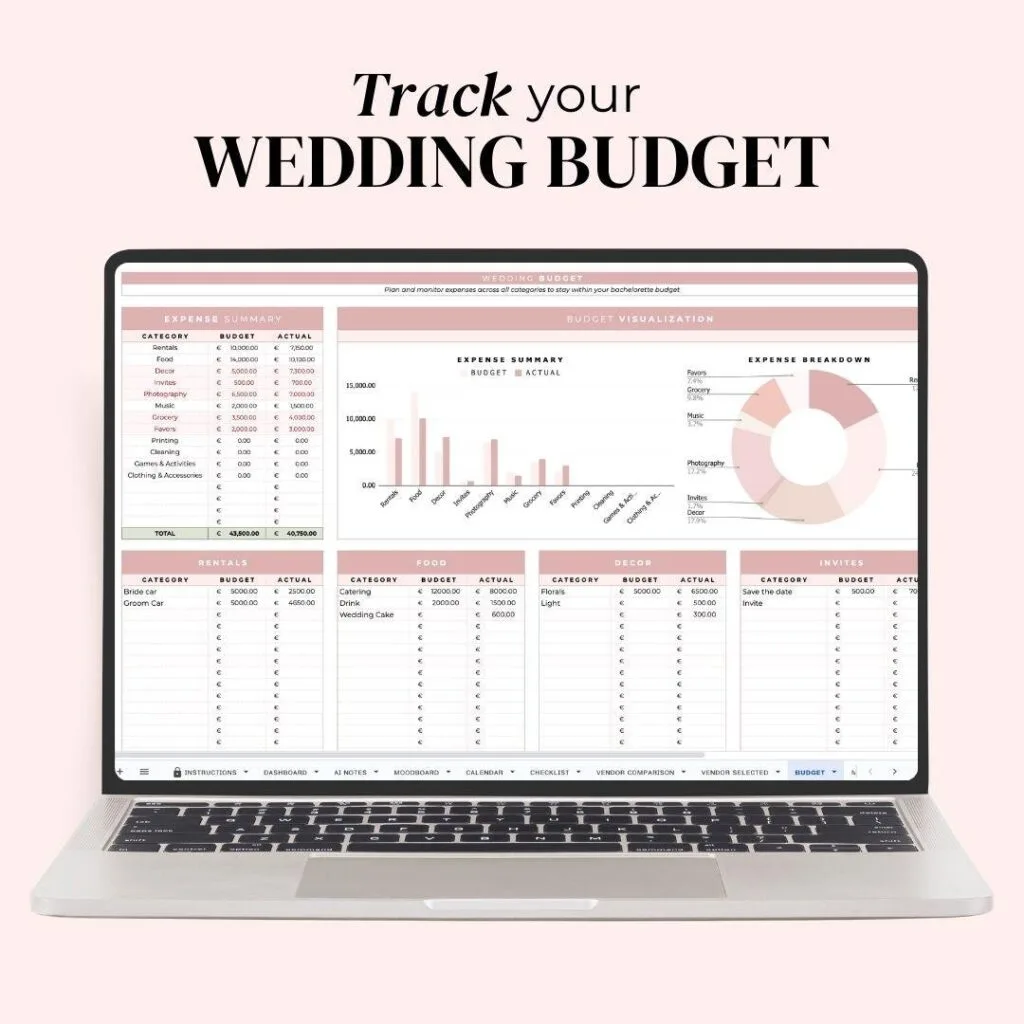
You do not want your entire budget committed to your major vendors with nothing left for the smaller expenses that appear as the wedding gets closer. And do not create a budget simply because you think you are supposed to have one.
Create a budget that reflects your actual priorities and your actual resources. Then use it throughout the planning process.
Your budget should help you make decisions, not simply tell you at the end that you have spent too much.
Remember that your budget is a planning tool, not a punishment. It should help you decide what matters most before you spend the money.
6. Read Your Wedding Venue Contracts
Please do not sign a wedding vendor contract based only on the price.
Read it.
Know what is included.
Know what is not included.
Know when payments are due.
Know the cancellation policy.
Know what happens if you postpone.
Know what happens if the vendor cancels.
Understand overtime charges and other fees that could apply.
If something is not clear, ask. This is not about being difficult with your vendors. It is about understanding what you are agreeing to.
A professional vendor should be willing to explain the terms of the agreement before you sign. It is much easier to ask questions before you sign a contract than to discover months later that you misunderstood what was included.
Pay particular attention to what happens if your plans change. A contract should not be something you only look at when there is a problem. Understand it before you sign it.
7. Do Not Leave the Wedding Timeline Until the Last Minute
Your wedding day timeline is much more than a list of times. It is the roadmap for your day. It coordinates people, vendors, transportation, photography, meals, setup, the ceremony, and reception events. And everything is connected.
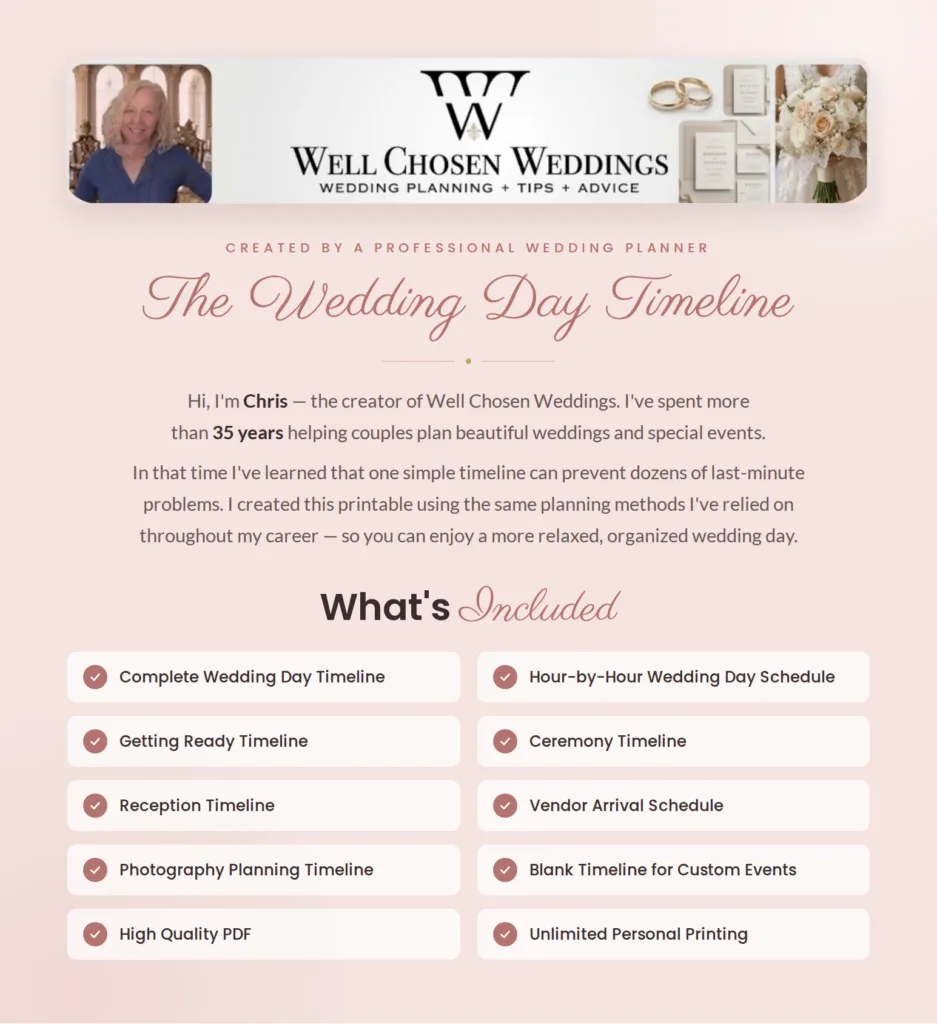
My wedding day timeline template is full of great ideas and tips to create your own wedding day timeline.
If hair and makeup runs late, getting dressed runs late. If getting dressed runs late, photographs may run late. If photographs run late, transportation may run late. And suddenly the entire day is behind. I do not recommend waiting until the final week to build your wedding-day timeline.
Start thinking about it early. Build it around the major events of the day, then work backward and allow realistic amounts of time for everything that has to happen before them.
Most importantly, share the finished timeline with the people who actually need it. Your vendors cannot coordinate around a schedule they haven’t seen.
A good timeline also gives your vendors something concrete to work from. It is much easier to identify conflicts when you are looking at the entire day on paper rather than handling each decision separately.
Your Wedding Day Needs More Breathing Room Than You Think
8. Build Extra Time Into Your Wedding Day Timeline
Getting ready almost always takes longer than expected. Hair takes longer. Makeup takes longer. Getting dressed takes longer. Getting everyone together for photographs takes longer.
And then there are the little conversations, interruptions, and unexpected moments that happen when a group of people is preparing for a major event. Do not build a timeline where everything has to happen perfectly. Give yourself breathing room.
I created my wedding day timeline using what I have learned from more than 35 years of planning weddings
An extra 15 or 30 minutes that you do not need is much less stressful than realizing you are already behind before the ceremony has even started.
One of the best things you can give yourself on your wedding day is time.
9. Someone Besides You Should Know the Plan
You should not be the person answering questions about where the flowers go. You should not be tracking down the photographer. You should not be explaining where the gifts belong. You should not be solving transportation problems while you are getting ready.
Your wedding day is not the day to be the project manager. Designate a trusted person or wedding professional to handle the questions and behind-the-scenes problems.
Give that person the timeline. Give them your vendor contact information. Give them whatever instructions they need. Then let them do their job. Your job is to get married and enjoy your wedding.
This is one of the simplest ways to protect your wedding day from unnecessary interruptions. The more questions someone else can answer for you, the more present you can be.
10. Your Wedding Vendors Cannot Read Your Mind
Even experienced wedding professionals need information. Do not assume that because someone is a professional, they automatically know what you want. Communicate important details clearly and in advance. Make sure your vendors have the information they need.
Your timeline.
Contact information.
Floor plan.
Venue information.
Important logistical details.
If there is something particularly important to you, say so.
If there is a family situation that a vendor needs to understand, communicate it. If there is something unusual about your venue or schedule, do not assume someone else will tell them. Clear communication prevents a tremendous amount of unnecessary confusion.
Your vendors are there to help make your day work. Give them the information they need to do that.
Do not be afraid to repeat important information. A five-minute conversation before the wedding is much easier than trying to solve a misunderstanding during the reception.
11. Give Your Photographer a Realistic Wedding Day Timeline
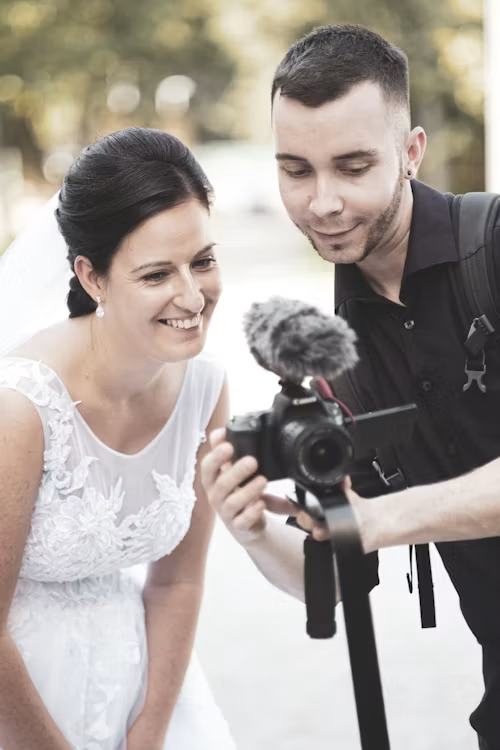
This is one of those areas where Pinterest can create unrealistic expectations. You cannot photograph 45 different combinations of people in 20 minutes.
If you have a long list of family photographs, wedding party combinations, and couple portraits, you need to allow enough time to actually take them. Talk with your photographer about the photographs that matter most to you.
If you are building your shot list, I put together a planner’s guide to 45 wedding photos that actually matter, including the family groupings and moments I would prioritize.
Prioritize.
A realistic shot list is much more useful than an enormous one. And remember that photography is part of the larger wedding-day timeline. If photographs take longer than expected, something else gets pushed.
That is why your photographer should be working from a realistic schedule rather than trying to squeeze an impossible number of photographs into a tiny window.
12. Do Not Schedule Every Minute of Your Wedding Day
A detailed timeline is helpful. A timeline that accounts for every five minutes can become a problem.
People do not move like clockwork. Someone needs to use the restroom. Someone gets pulled into a conversation. A family member cannot find the right room. A vendor needs an extra few minutes. A photograph takes longer than expected. Those things happen.
If every minute of your day is already accounted for, even a small delay can make everything feel rushed.
Leave some breathing room. Your wedding day should have space for the unexpected. And some of the best moments may be the ones you didn’t schedule.
Think of your timeline as a framework for the day, not a stopwatch.
Do Not Forget to Take Care of Yourself
13. Make Sure You Eat Something on Your Wedding Day
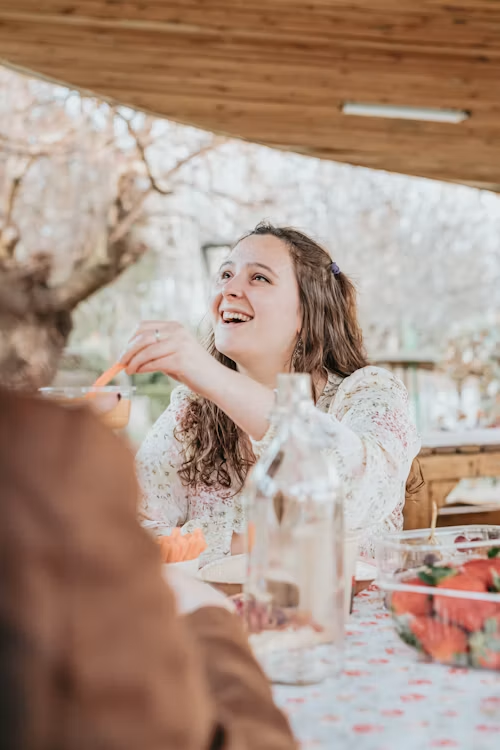
This sounds obvious. It is not. Couples can spend hours getting ready, taking photographs, greeting guests, and moving from one part of the day to another without eating enough. Do not assume you will just grab something later. Schedule food for yourself. Make sure you actually have access to it. And if necessary, designate someone to make sure you eat.
You have spent months planning your wedding. You should not spend the wedding day feeling exhausted and hungry because there was no time built into the schedule for you to eat.
If your schedule does not show when and where you will eat, there is a good chance the day will get busy, and you will skip it. Put it on the timeline.
Take care of yourself.
14. Remember to Drink Water on Your Wedding Day
The same goes for water. You will probably be talking, walking, dancing, taking photographs, and spending a lot of time on your feet. Keep water available. Ask someone to remind you to drink it if necessary. It is such a small thing, but it can make a surprising difference in how you feel throughout the day.
Your wedding day is physically demanding. Take care of yourself so you can actually enjoy it.
15. Your Guests Will Notice How the Wedding Feels
Your guests may not remember every centerpiece. They may not remember exactly what color your napkins were. They may not remember every small decorative detail.
But they will remember how the wedding felt. Did they feel welcomed? Could they find their way around? Were they comfortable? Did they know what was happening? Could they hear the ceremony? Did they have enough time to eat? Did they feel included?
The guest experience matters just as much as the visual details of your wedding. I put together a complete guide to help you think through the day from your guests’ perspective.
Those are the details that make up the guest experience. When you’re planning, occasionally stop thinking like the person hosting the wedding and think like the person attending it.
Walk through the experience from your guests’ perspective. Where do they arrive? Where do they go? What do they need to know? Where will they wait? How long will they be standing? How will they know what happens next?
Beautiful décor is wonderful. But thoughtful hospitality matters too.
16. Do Not Underestimate Wedding Transportation
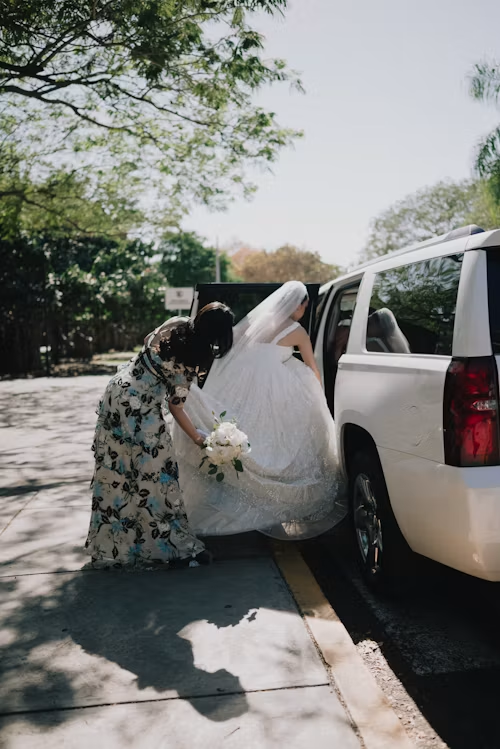
Transportation is one of those things that can quietly disrupt an otherwise beautiful timeline. Maybe your wedding party is getting ready at one location, and the ceremony is somewhere else.
Maybe the ceremony and reception are at different venues. Maybe guests are staying at a hotel. Maybe you have a shuttle.
Every movement takes time. And transportation time isn’t just the time it takes to drive from one location to another.
People have to get into the vehicle. People have to get out. Someone may have forgotten something. Vehicles have to park. Traffic happens. Loading takes time.
Build that reality into your schedule. A five-minute drive does not necessarily mean you should give yourself five minutes.
If transportation is part of your wedding plans, build loading, unloading, parking, and gathering people into the schedule instead of counting only the actual driving time.
17. Have a Real Wedding Day Back-Up Plan for Bad Weather
Even an indoor wedding can be affected by weather. Rain can affect transportation. Heat can affect guest comfort. Wind can affect décor.
Weather can affect photographs, deliveries, and outdoor cocktail hours. If you have any outdoor part of your wedding, have a real backup plan.
Not:
“We’ll figure it out.”
A real plan. Where does the ceremony move? When will the decision be made? Who communicates the change? Where do the guests go?
What happens to the chairs and décor?
What does the vendor team need to know?
You don’t need to spend your wedding day worrying about the weather.
You do need to know what you’ll do if the weather doesn’t cooperate.
18. Assign Someone to Handle Your Wedding Day Personal Items
Your wedding day comes with a surprising number of personal items. Your phone. Emergency kit. Marriage license. Cards. Gifts. Overnight bag. Veil. Shoes. And all the little things that accumulate throughout the day.
Decide ahead of time where these things will go and who is responsible for them. You should not be carrying everything around with you. And you don’t want to be searching for your overnight bag at the end of the reception. Give someone this responsibility before the wedding day arrives.
This is another small responsibility that is easy to overlook because each individual item seems unimportant. Together, they can create a surprisingly stressful end-of-the-night problem.
19. Decide Ahead of Time What Happens to Your Wedding Gifts and Personal Items
This is another detail that can easily get overlooked. At the end of the night, someone needs to know what happens to the cards, gifts, décor, and personal belongings.
Who takes them home? Where do they go? Who is responsible for collecting them? What happens to leftover items from the reception?
Decide this before the wedding. Assign the responsibility to a specific person. “Someone will take care of it” is not really a plan. A named person with clear instructions is a plan.
Write these instructions down and give them to the person responsible. That way they do not have to track you down to ask what should happen at the end of the night.
20. Tell Your Wedding Party What You Actually Need From Them
Your wedding party is not just there to look great in photographs. They can also be an important part of helping the day run smoothly. Tell them where they need to be. Tell them when they need to arrive. Tell them what responsibilities they have.
If you are unsure what to ask of your wedding party, my guide to modern bridal party roles explains what members of your wedding party can realistically help with.
If someone needs to help gather people for photographs, hold your phone, keep track of personal items, or help with your dress, tell them. Do not assume they will automatically know. Clear expectations make everyone’s day easier.
And most people are much happier helping when they know exactly what you need from them.
21. Something Will Probably Go Wrong on Your Wedding Day
A boutonniere may break. Someone may be late. A button may pop. The weather may change. The cake may not look exactly like the picture. Something may happen. That is wedding planning.
The goal is not to prevent every possible problem. You cannot. The goal is to have a plan for handling problems without allowing them to take over your day. This is why delegation is so important.
When something unexpected happens, you want someone who can say, “I’ve got it.” You don’t want every small problem delivered directly to you.
The better question is not “How do I make sure nothing goes wrong?” It is “Who will handle it if something does?”
22. Not Every Problem Needs to Become Your Problem
This may be one of the biggest pieces of advice I can give you. If something goes wrong and you do not need to know about it, let someone else handle it. You do not need to know that a delivery truck is five minutes late. You do not need to know that a vendor is trying to find the correct entrance. You do not need to know that someone cannot find an extension cord. Those are behind-the-scenes problems. Let your designated person handle them.
There is a big difference between being informed about something important and being interrupted by every small problem that happens throughout the day. Protect your wedding-day experience. Not every problem belongs to you.
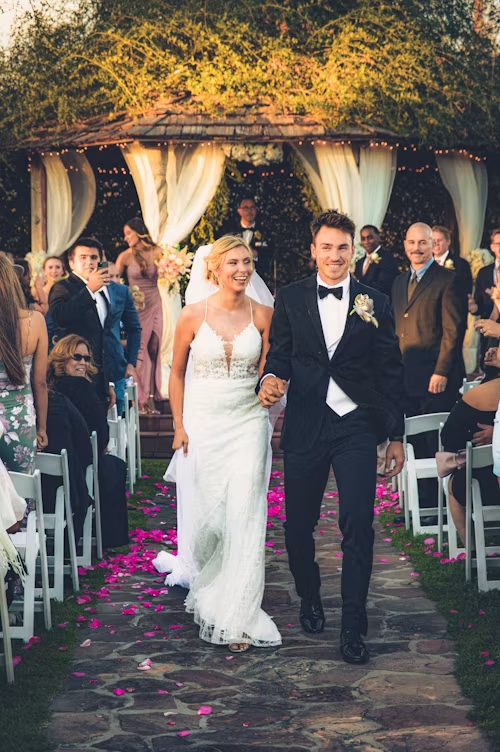
23. Take 10 Quiet Minutes Alone as Newlyweds
Immediately following your ceremony or during cocktail hour, step into a private room with your spouse for 10 undisturbed minutes. Eat a bite of food, sign your marriage license, and absorb the reality that you just got married before joining the crowd.
24. Pause and Take Mental Snapshots Throughout the Night
The wedding day moves astonishingly fast. Three or four times during the reception, pause for 30 seconds, look around the room at all the people gathered to celebrate you, and lock that feeling into your memory.
25. Focus on the Marriage, Not Just the Party
When the music stops, the sparklers burn out, and the dress gets packed away, what remains is your marriage. Keep your eyes on each other, laugh off the imperfections, and celebrate the incredible journey you are starting together.
Celebrate the people who were there. The stories you will tell. The photographs you will look back at. The moments you did not plan. The things that made you laugh. The people who traveled to celebrate with you.
Wedding Planner’s Final Advice
After more than 35 years of planning weddings, I have seen beautiful weddings that were not perfect. I have seen small problems disappear without guests ever knowing they happened. I have seen couples worry about details that nobody else noticed.
And I have seen couples who were able to let go of the little things, take a breath, and actually enjoy their wedding day. That is what I want for you.
Plan carefully.
Ask questions.
Know your priorities.
Build a realistic budget.
Create a realistic timeline.
Communicate with your vendors.
Have backup plans.
Give someone else responsibility for the details that do not need to belong to you.
And then, when the day finally arrives, let yourself be there.
Look around.
Eat your dinner.
Drink some water.
Dance.
Laugh.
Notice the people you love.
Because your wedding does not have to be perfect.
It just needs to feel like the two of you.
Get the Free 25 Things Every Couple Should Know Guide
If you found these tips helpful, I have put them together in a simple printable guide you can keep with your wedding planning materials.
25 Things I Wish Every Couple Knew Before Their Wedding Day
Keep it handy as you plan, and come back to it as your wedding day gets closer.
Frequently Asked Questions About Things I Wish Couples Knew Before Their Wedding
Start by knowing your priorities, creating a realistic budget, understanding your vendor contracts, and building a realistic wedding-day timeline. Just as importantly, decide ahead of time who will handle questions and problems on the wedding day so you aren’t managing everything yourself.
Build extra time into the schedule, communicate clearly with vendors, delegate responsibilities, and have a plan for common problems such as weather, transportation, and personal items. The goal is not to eliminate every possible problem. It is to make sure a small problem does not become your problem.
A wedding day timeline should include getting ready, photography, transportation, the ceremony, cocktail hour, reception events, meals, and the final send-off. It should also account for setup, travel, and transition time between events.
There isn’t one amount of time that works for every wedding. The number of people, photographs, locations, and combinations all affect the schedule. Talk with your photographer about the photographs that matter most and build a realistic amount of time into the timeline rather than trying to fit an enormous shot list into a short window.
Yes, particularly if any part of the wedding takes place outdoors. A backup plan should identify where the event will move, who will make the decision, how guests will be informed, and what vendors need to know.
Ideally, someone other than the couple should handle vendor questions, transportation questions, personal items, gifts, timeline questions, and small logistical problems. That person might be a wedding planner, coordinator, or trusted person you’ve specifically designated for the job.
Remember that your guests usually do not know what was supposed to happen. A small change that feels enormous to you may be completely invisible to everyone else. Take a breath, let your designated person handle the problem when possible, and keep enjoying your wedding.
Don’t make the goal a perfect wedding. Make the goal a meaningful one. Plan carefully, but leave room for real life. Your wedding day is about the two of you and the people you have gathered to celebrate with you.
Couples often focus on the major decisions and overlook smaller logistical details such as transportation time, meals for the couple, water, personal items, gifts, vendor contact information, and who will handle questions during the day. These details may seem minor, but having a plan for them can prevent unnecessary stress.
Some common mistakes include setting a budget without accounting for additional expenses, leaving the wedding-day timeline until the last minute, trying to manage everything themselves, giving vendors incomplete information, and failing to build enough time into the schedule. Another common mistake is spending too much energy trying to make the wedding perfect instead of deciding what actually matters most.
The best way to protect your wedding-day experience is to plan ahead and delegate responsibility. Give someone else the timeline, vendor contact information, personal-item instructions, and other logistical details. When a problem comes up, you want someone else to be able to say, “I’ve got it,” so you can stay focused on the people and moments that matter.
First, take a breath. Then determine whether the problem actually requires your attention. If it does not affect the ceremony, your safety, your guests’ comfort, or something truly important to you, let someone else handle it. Your guests usually do not know what was supposed to happen, so a small change may be completely invisible to them.
Final Thoughts
After 35+ years planning weddings, I have learned that the wedding days that stay with me are not necessarily the ones where every detail went exactly according to plan.
They are the ones where the couple was present.
They laughed.
They looked around the room.
They enjoyed their guests.
They did not let a small problem steal a big moment.
That is what I want for you.
Plan the details.
If you are still in the middle of planning, start with the decisions that affect everything else: your guest list, your budget, your venue, your priorities, and your wedding-day timeline. Then work outward from there.
But do not forget to experience the day you are planning.
If you are ready for the next step, my Wedding Planning Guide brings together my wedding planning advice, timelines, budget guidance, guest planning resources, and practical checklists in one place.
Chris Ramsay is a wedding planner with over 35 years of experience in hospitality, country clubs, and event planning. She shares practical wedding advice, budget-friendly ideas, and real-world tips to help couples plan stress-free weddings at Well Chosen Weddings. Learn more about her on her about page.
Make Wedding Planning Easier
Planning a DIY wedding means keeping track of more than decorations. You also have a budget to manage and a wedding day to organize. I created these shortcuts to help you with your wedding planning.
Wedding Budget Tracker
Keep your wedding expenses organized and see exactly where your money is going.
Wedding Day Timeline
Keep your wedding day organized so you know what needs to happen and when.