

After 35 years of planning weddings professionally, I can tell you with confidence that a wedding planner is not a requirement for a beautiful, organized, and stress-free wedding day. Many of my favorite weddings have been planned entirely by the couple themselves, often with outcomes just as polished as anything I could have produced. What they had in common was not a big budget or natural talent for organizing. They had a clear structure, and they followed it.
This guide gives you that structure. Thirteen steps, in order, with specific guidance on each one. from setting your vision and budget through building your day-of timeline and preparing for everything that could go wrong.
This post contains affiliate links. I earn a commission on purchases made through these links at no additional cost to you.
Can You Plan a Wedding Without a Planner?
Yes, absolutely. Many couples successfully plan their own weddings by creating a clear budget, following a timeline, booking reliable vendors early, and using checklists to stay organized. Hiring a planner can help, but it is not required for a beautiful and stress-free wedding.
Common Mistakes When Planning a Wedding Without a Planner
Waiting too long to book vendors
Popular venues and photographers book quickly. Here is my guide to booking the perfect venue.
Underestimating the budget
Always leave room for hidden costs and last-minute expenses. Here is my guide to planning your wedding budget, including a helpful worksheet. This blog will explain how to look out for hidden fees when planning your wedding.
Skipping a wedding day timeline
Without a timeline, the day can quickly feel chaotic. This is my wedding day timeline.
Trying to do everything alone
Delegate simple tasks to trusted family and friends. Deligate! That is what your wedding party is for. Here is the guide to the roles of the members of your wedding party.
Step 1: Start With Your Vision
Before booking anything, get clear on:
- Wedding style (formal, casual, backyard, elegant)
- Guest count
- Season or preferred date
- Overall vibe
Your vision does not need to be fully formed before you begin, but you do need enough of a direction to make your first few vendor decisions. The single most important thing to decide early is your guest count, because it determines your venue options, your catering costs, and ultimately your entire budget. Everything else — style, season, vibe- can be refined over time. Write down your answers to these four questions and keep them somewhere accessible throughout the planning process. Every decision you make should pass through this filter.
This helps guide every decision moving forward.
These blogs will also be very helpful:
12 Month Wedding Planning Guide
A great guide if you are just getting started is my Wedding Planning Page.

to keep up with the latest wedding trends, read this blog on 25 wedding trends for 2028.
Step 2: Set a Realistic Wedding Budget
Your budget determines everything, so start here.
Break it down into categories:
- Venue
- Catering
- Photography
- Attire
- Decor
- Entertainment
The most important number in your budget is not your total; it is your per-person cost. Divide your total budget by your expected guest count, and you will immediately understand what level of catering, venue, and vendor quality is realistic for your number. As a general rule, food and beverages alone should account for 30 to 40 percent of your total wedding budget. The venue typically runs another 20 to 30 percent. Photography, which is a permanent record of your day, should not be the first place you cut. Set aside a minimum of 10 percent of your total budget as a buffer for unexpected costs, and expect to use it.
Always set aside a buffer for unexpected costs
How to Create a Wedding Budget
Make Your Wedding Budget Easier to Manage
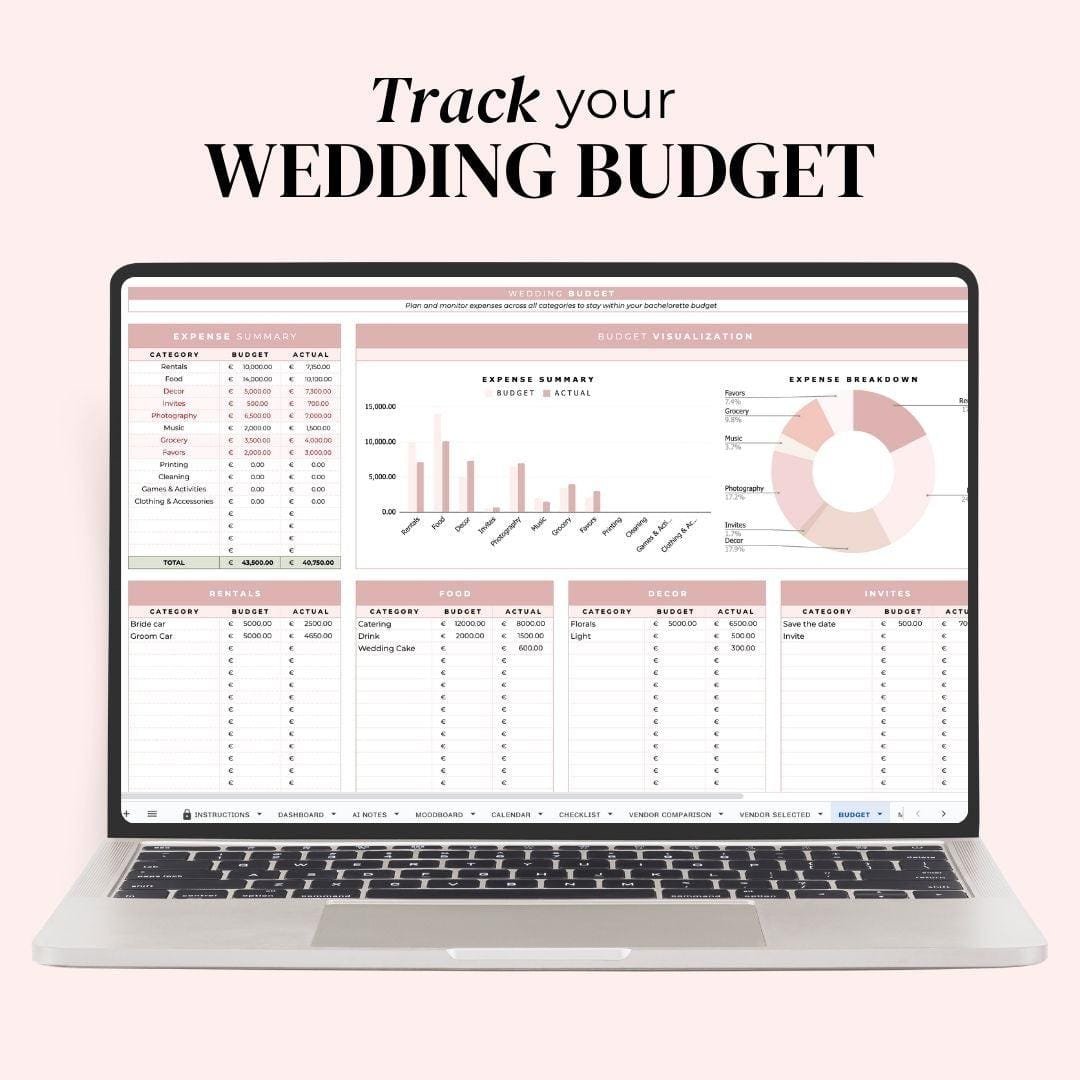
Setting a total wedding budget is only the beginning. The real challenge is keeping track of what you plan to spend, what you have already paid, and where unexpected expenses are starting to add up.
If you are planning your wedding yourself, a simple budget worksheet can make this much easier.
I created my Wedding Budget Worksheet to help you organize your expenses, track your spending, and see where your money is going as you plan.
Want to keep your wedding spending organized? Get the Wedding Budget Worksheet here.
Step 3: Create a Wedding Planning Timeline
Without a planner, your timeline is your best friend.
Typical flow:
- 12+ months: book venue and major vendors
- 9 months: dress, decor planning
- 6 months: finalize vendors
- 3 months: details and RSVPs
- Final month: confirmations
The most common planning mistake couples make without a planner is not following a timeline; it is following a timeline that starts too late. Venues and photographers in most markets book 12 to 18 months in advance, especially for Saturday dates in peak seasons. If you are working with a shorter timeline, it is not impossible, but you will have fewer choices at every step. The earlier you start, the more negotiating power you have with vendors and the less you will pay in rush fees or last-minute premiums.
Plan a Wedding in 12 Months
Plan a Wedding in 6 Months
Step 4: Book Your Venue First
Your venue sets:
- Date
- Guest count
- Style
Your venue is the most consequential decision in the entire planning process because it sets your date, your guest count cap, your catering options, your decor constraints, and your overall aesthetic in a single choice. Before touring venues, confirm whether they require you to use their preferred caterers or vendors — this significantly affects your budget. Ask about what is included in the rental fee versus what costs extra, including tables, chairs, linens, parking, and cleanup. Backyard weddings can be beautiful and cost-effective, but come with their own costs for tent rentals, restroom facilities, and staffing that many couples do not anticipate.
Popular options:
- Traditional venues
- Backyard weddings
- Outdoor spaces
One of the easiest ways to stay organized during wedding planning is to keep your registry simple. MyRegistry.com allows you to combine multiple registries into one place, making it easier for both you and your guests.
Step 5: Hire Key Vendors Early
Focus on your top priorities:
- Photographer
- Caterer
- DJ or band
- Florist
- Officiant
- Hair and makeup
- Transportation
- Cake baker
- Rental company
When interviewing vendors, always ask for a written contract before paying any deposit. The contract should specify exactly what is included, the payment schedule, what happens in the event of a cancellation or illness, and who the backup contact is. Read reviews on Google and wedding-specific platforms rather than relying solely on the vendor’s website. For photographers and videographers specifically, ask to see full galleries from complete weddings, not just the highlight shots used in portfolios. A vendor who consistently produces strong results across an entire wedding day is more valuable than one who occasionally produces stunning single images.
Tip: Read reviews, compare packages, and always get contracts.
Step 6: Stay Organized With Checklists
You’ll need:
- Master wedding checklist
- Guest list tracker
- Vendor contact sheet
The difference between couples who feel in control of their planning and those who feel overwhelmed is almost always documentation. Every vendor interaction — emails, calls, confirmations- should be logged somewhere accessible to both partners. Create a single shared document or folder where contracts, payment receipts, vendor contacts, and your master checklist all live together. This becomes especially important in the final two months when the number of moving pieces increases significantly. Your maid of honor or a trusted family member should have access to this document as well, so they can step in if anything needs to be communicated on the wedding day itself.
This keeps everything from slipping through the cracks.
Here is my free wedding guest list worksheet:
If you are doing the wedding planning yourself, you will want to grab this list of 25 cute wedding ideas that you can incorporate into your wedding.
Step 7: Simplify Your Decor
You don’t need to overdo it.
Focus on:
- Tablescapes
- Ceremony backdrop
- Lighting
The single most effective decor decision for couples planning without a planner is to commit fully to one focal point per space rather than trying to decorate every surface. Your ceremony backdrop, your sweetheart table, and your dessert display are the three areas that appear most in photos and receive the most guest attention. Invest there. For the rest of the room, consistent candles, simple greenery, and coordinated linens create a cohesive look without requiring significant DIY effort or expense. If your budget is limited, rent rather than buy for large items like arches and specialty furniture; most rental companies will deliver and pick up, which removes a significant logistical burden on the wedding day.
DIY Wedding Table Decor Ideas
Non-Floral Centerpieces
For bridesmaids’ dresses that coordinate beautifully with any wedding style and budget, AW Bridal offers a wide range of options.
Step 8: Plan for Your Guests’ Experience
A great wedding isn’t just about aesthetics; it’s about how your guests feel.
Think about:
- Seating charts
- Clear signage
- Comfortable flow
Guests notice the things that make them comfortable: clear signage that tells them where to go, a timeline that does not leave them waiting between events for more than 15 to 20 minutes, food that arrives at a reasonable hour, and enough variety at the bar to feel genuinely welcome. They also notice the things that make them uncomfortable: confusion about seating, a ceremony that starts more than 15 minutes late, or a reception where nothing happens for long stretches. As the couple planning without a planner, you need someone on the wedding day- a trusted friend, a family member, or a day-of coordinator- whose sole job is making sure guests know where to be and what is happening next.
Wedding Seating Chart Ideas
Guest Experience Guide
Seating chart mistakes to avoid

Step 9: Build a Day-of Timeline
This is crucial when you don’t have a planner.
Include:
- Getting ready schedule
- Ceremony timing
- Reception flow
- Vendor arrivals
Your day-of timeline should be built backwards from your ceremony start time, not forwards from when you wake up. Determine when guests should be seated, then calculate backward to account for the recessional, processional, photography, getting-ready time, travel, hair and makeup, and vendor setup. Share the final timeline with every vendor at least two weeks before the wedding. Your photographer, caterer, DJ or band, and any rental companies should all have a copy with their specific arrival times, setup windows, and departure times clearly marked. Vendors cannot execute well without a timeline, and couples who skip this step are the ones who end up feeling rushed through every moment of the day.
Take the Guesswork Out of Your Wedding Day Timeline
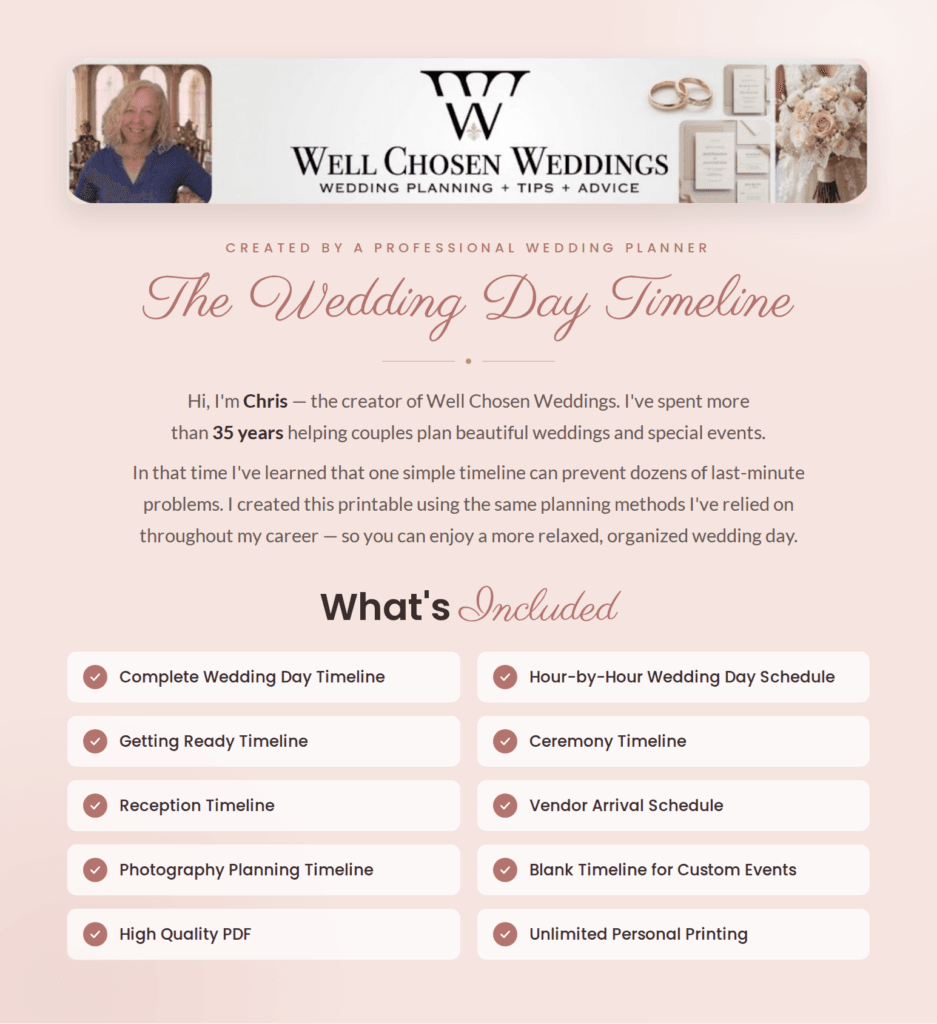
Your wedding day is not the time to discover that hair and makeup needs another 45 minutes, family photos are taking longer than expected, or your vendors are working from different schedules.
A realistic timeline gives everyone a plan to follow and gives you room to enjoy your day instead of constantly watching the clock.
I created my Wedding Day Timeline to help you organize the entire day, from getting ready through the ceremony, reception, and final send-off.
Ready to build a timeline that actually works? Get the Wedding Day Timeline here.
Step 10: Ask for Help
Even without a planner, don’t do it alone.
Ask:
- Friends
- Family
- Bridal party
Assign simple roles like:
- Setup
- Coordination
- Vendor communication
One of the most practical investments a couple planning without a professional planner can make is hiring a day-of coordinator. This is different from a full wedding planner; a day-of coordinator typically costs between $500 and $1,500, meets with you once or twice in advance, takes over all vendor communication in the final two weeks, and runs the wedding day itself so that you and your family can be fully present. You have done all the planning. A day-of coordinator makes sure the day you planned actually happens the way you intended it.
Step 11: Prepare an Emergency Kit
Trust me, this is a lifesaver.
Include:
- Safety pins
- Tissues
- Stain remover
- Pain reliever
The emergency kit is one of those things that feels unnecessary until the moment it is not. Assign one person, your maid of honor, a bridesmaid, or a trusted friend, to carry the kit throughout the day and be the point of contact for small problems. Over 35 years of planning weddings, the most common wedding day emergencies are a popped button or loose hem, a makeup emergency, a headache from dehydration, and a vendor who is running late. The kit addresses the first three; your timeline and vendor confirmation calls handle the fourth.
Read this blog on the Wedding Day Emergency Kit. Includes the full list.
Step 12: Create a Wedding Planning Binder
Keep contracts, vendor contacts, payment schedules, inspiration photos, and your master checklist in one place.
Whether you use a printable planner or a simple binder, staying organized will make planning much less stressful.
Your binder should have one section per vendor, each containing the signed contract, payment receipt, vendor contact information, and a copy of the specific services or items they are providing. Add a section at the front for your master timeline and checklist, and a section at the back for inspiration photos and any design notes. Bring the binder to every vendor meeting. When you are coordinating nine or more vendors without a professional managing the relationships, having every piece of documentation immediately accessible prevents the most common miscommunications.
This binder from Amazon is 132 pages of helpful information. Stay organized and keep everything in one place.
Step 13: Enjoy the Process
Planning your own wedding is one of the more demanding projects most people will ever take on, and it is also one of the most meaningful. There will be moments when the vendor who seemed perfect suddenly is not available, or when the flowers you wanted are out of season, or when you are reconciling the budget for the fourth time in a month. In 35 years of watching couples plan their own weddings, the ones who enjoy the process most are the ones who remember that the planning is not the point, the marriage is. Every decision is in service of one day with the people you love. Keep that perspective, delegate everything you can, and permit yourself to let some things be imperfect. The wedding will be beautiful regardless.
Stay flexible, stay organized, and remember what the day is really about.
Wedding Planning Without a Planner FAQs
Yes, significantly so in most cases. A full-service wedding planner typically costs between $2,000 and $8,000 or more, depending on your market, in addition to your wedding budget. Planning your own wedding eliminates that fee, but it does require a meaningful investment of your time. Most couples who plan their own weddings spend between 200 and 400 hours over the course of the engagement. The tradeoff is worth it for couples who are naturally organized and genuinely enjoy the process.
Start as early as possible, with 12 to 18 months being the ideal window for most couples. This is especially important if you want a specific venue or a particularly sought-after photographer, both of which often book a year or more in advance for peak-season dates. If you are working with a shorter timeline of six months or less, it is absolutely doable, but you will need to move faster on every decision and may have fewer vendor options to choose from.
Yes, for most couples, a day-of coordinator is one of the best investments in the entire wedding budget. They typically cost between $500 and $1,500, take over vendor communication in the final two weeks, and run the wedding day itself so you can be fully present without managing logistics. You have done all the planning, and a day-of coordinator makes sure your plan actually executes the way you intended.
Most couples find that vendor coordination in the final month, timeline management on the wedding day itself, and staying within budget as costs creep up are the three biggest challenges. Having a clearly documented master checklist, a shared vendor contact sheet, and a detailed day-of timeline with copies sent to every vendor in advance addresses all three.
Final Thoughts
Planning a wedding without a wedding planner may seem intimidating at first, but with a clear plan, strong organization, and the right resources, you can absolutely pull it off.
The most memorable weddings are not the most expensive ones. They are the weddings that feel personal, thoughtful, and full of love. With good planning and the right support, you can create a beautiful day that feels completely your own.
For the latest wedding trends, read this blog: 25 Wedding Trends For 2028.
And the best part? You know that every detail was chosen by you and your partner.
Chris Ramsay is a wedding planner with over 35 years of experience in hospitality, country clubs, and event planning. She shares practical wedding advice, budget-friendly ideas, and real-world tips to help couples plan stress-free weddings at Well Chosen Weddings. Learn more about her on her about page.


