After 35 years of planning weddings, I can tell you the same thing I have told every couple who has sat across the table from me at the beginning of the planning process: start at the beginning and work through it one step at a time. Most of the stress couples experience comes not from the work itself but from jumping ahead, trying to make decisions before the foundation is in place, or letting someone else’s timeline become theirs.
This guide walks through every stage of the process in the order it should actually happen, from the very first conversation with your partner through the final thank-you notes after the wedding. Follow it in sequence, use the linked guides for more detail on each topic, and let yourself enjoy what is genuinely one of the most meaningful planning experiences of your life.
But here’s the truth: wedding planning does not have to be hard or stressful. If you just start at the beginning and take it step by step, it can actually be fun, yes. This is an important time in your lives, and you are planning an important, life-altering event. It will join the two of you and your families. You will learn a lot about each other, your families, and your priorities.
If you are looking for a complete resource with checklists, budget tips, and decor ideas, visit my Wedding Planning Guide here.
This blog contains affiliate links. As an affiliate, I earn a commission from qualifying purchases at no additional cost to you.
In This Guide
In this wedding planning guide, I will walk you through every part of the wedding planning process, giving you everything you need to know. From setting a budget to picking the perfect playlist, I will share what works, what matters, and what you can skip. It is all laid out in the order you should tackle it, so you do not get ahead of yourself or feel buried in decisions.
Let us make planning your big day simple, stress-free, and even fun.
Start here: Wedding Planning Guide. Everything you need to know to get started on your wedding planning.
Where to Begin
The most common planning mistake is starting in the wrong place. Couples book a venue before setting a budget, choose a dress before knowing the wedding style, or send save-the-dates before finalizing the guest count. Each of these creates problems that require backtracking later.
The right order is straightforward: vision first, then budget, then guest count, then venue. Everything else follows from those four decisions in that sequence.

How to Start Planning a Wedding (Quick Checklist)
If you are wondering where to start, this quick wedding planning checklist gives you an overview of the entire process. Think of it as your roadmap for planning a wedding step by step.
Checklist
• Talk about the type of wedding you both want
• Create a rough guest list
• Choose your wedding venue
• Set a realistic wedding budget
• Book your most important vendors
• Plan your ceremony and reception details
• Personalize your wedding décor and experience
• Create a wedding day timeline
• Assign responsibilities for the big day
• Prepare a wedding emergency kit
• Enjoy your wedding day
• Send thank-you notes and wrap up final details
Step 1: Talk About the Wedding You Both Want
The very first step is simply having an honest conversation with your partner.
Not just about colors or flowers, but about the overall vision.
Ask each other questions like:
- Do we want a big wedding or something small and intimate?
- Indoor venue or outdoor setting?
- Formal, elegant, relaxed, or fun?
- What traditions matter most to us?
- What do we definitely not want?
You may not agree on everything right away, and that is completely normal. Wedding planning often reveals different expectations from family members, too.
The goal of this conversation is simply to create a shared vision, so you are working as a team.
This early conversation prevents many common wedding planning disagreements later. When couples clearly understand each other’s priorities, it becomes much easier to make decisions about venues, budgets, guest lists, and décor.
Write down:
• Your must-haves
• Your nice-to-haves
• Your “not important” items
You’ll refer back to this list throughout the planning process.
Step 2: Create a Rough Guest List
Your guest list influences almost every other decision you’ll make.
This blog will walk you through creating your wedding guest list.
The number of guests affects:
- venue size
- catering cost
- table rentals
- invitations
- overall budget
This is why creating a rough guest estimate early is so helpful.
Start by listing:
- Immediate family
- Extended family
- Close friends
- Work friends
- Family friends
Once you see the numbers, you can start discussing priorities.
Your guest list may change several times during the planning process, and that is completely normal. Many couples begin with a long “dream list,” then narrow it down based on their venue capacity and budget. Starting with a rough estimate simply helps guide your early planning decisions.
Remember, weddings often involve balancing expectations from both families. Some couples divide guest counts evenly between families, while others focus only on close relationships.
There is no perfect rule; the right guest list is simply the one that feels right to you.
Once your initial guest list is taking shape, setting up your wedding website is one of the most practical early moves you can make. It gives guests a central location for all event details, RSVPs, and registry links from the moment your save-the-dates go out. WedSites offers a free platform that is simple to set up and covers everything from RSVP management to digital invitations.
Step 3: Choose Your Wedding Venue
After estimating your guest count, the next major step is choosing a venue.
This blog will help you when selecting your wedding venue.
Your venue will set the tone for the entire wedding and often determines:
- your wedding date
- guest capacity
- decor style
- catering options
- overall cost
Some couples choose separate ceremony and reception venues, while others prefer an all-in-one location.
When touring venues, ask questions like:
- What is the maximum guest capacity?
- What is included in the rental price?
- Are tables, chairs, or linens included?
- Is there a backup plan for outdoor weddings?
- Are there vendor restrictions?
Popular venues can book 12–18 months in advance, so once you find one you love, it’s a good idea to secure your date.
This guide will walk you through a 12-month wedding planning timeline.
Wedding Planning Timeline: Your 12-Month & 6-Month Wedding Planning Guide.
Step 4: Create a Realistic Wedding Budget
Once your venue is selected, you can create a clearer budget.
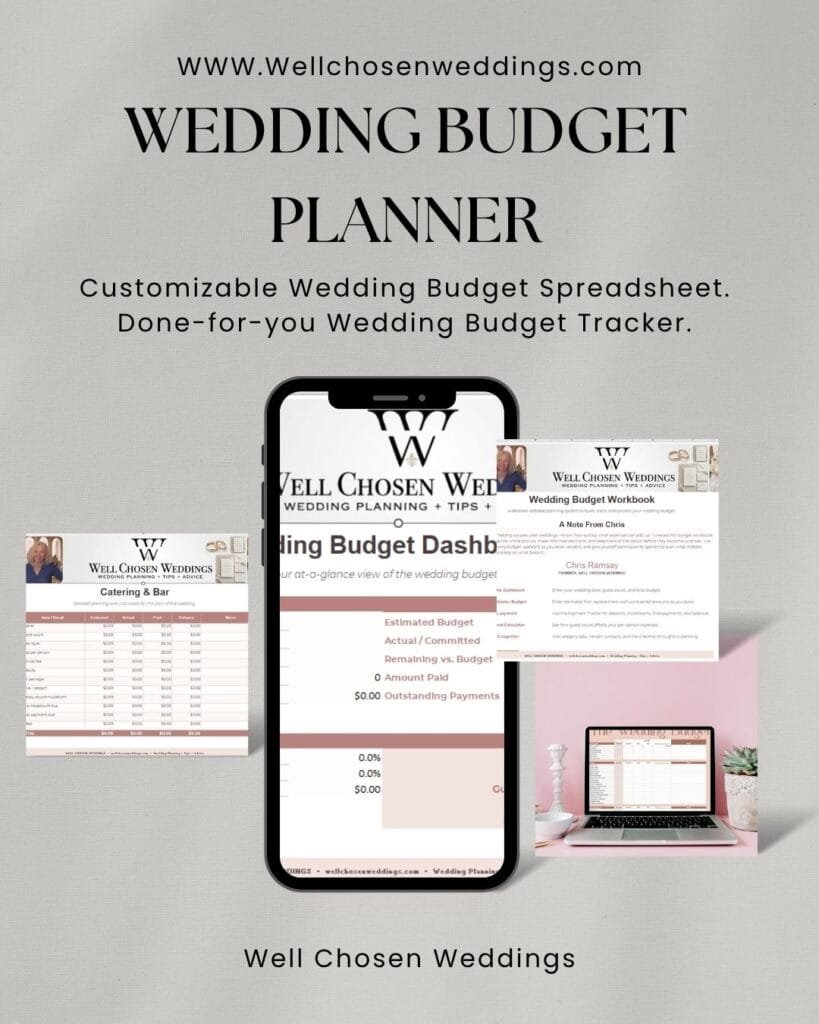
This blog will help you when planning your wedding budget. It includes a free wedding budget worksheet.
Your budget should account for the major wedding categories:
- Venue
- Catering
- Photography
- Attire
- Flowers
- Entertainment
- Rentals
- Invitations
- Transportation
- Miscellaneous costs
Many couples are surprised to learn that catering and venue costs often make up nearly half of the total budget.
I created this easy-to-use, editable wedding budget spreadsheet for you. After helping couples for many years who are struggling with their wedding budgets, I created a complete guide to your wedding budget. It includes tracking of deposits and expenses, as well as RSVPs
If you are trying to save money, consider these ideas:
• Choose an off-season wedding date
• Reduce guest count
• Reuse ceremony decor at the reception
• Simplify favors or printed materials
For example, ceremony flowers can later become reception centerpieces, and bridesmaid bouquets can decorate the cake table.
Small adjustments like these can make a big difference.
How long does it take to plan a wedding
Most couples spend 12 to 18 months planning a wedding, although shorter timelines are absolutely possible. The timeline often depends on venue availability, guest count, and how complex the wedding will be.
For example:
• Large weddings with many vendors often take 12–18 months
• Small weddings may be planned in 6–9 months
• Intimate elopements can sometimes be planned in just a few weeks
The key is prioritizing the most important decisions first, especially your venue and key vendors.
Step 5: Book Your Key Vendors
Once your venue and budget are set, it’s time to book the vendors who help bring everything together.
When choosing vendors, always review their portfolios, read reviews from previous couples, and schedule a conversation before booking. The best vendors not only match your style but also communicate clearly and make you feel comfortable throughout the planning process.
The vendors that typically book up first include:
- Photographers
- Videographers
- Caterers
- DJs or bands
- Wedding planners
- Florists
Start researching vendors whose style fits your vision and schedule consultations to see if they’re a good match.
Remember, the best vendors don’t just provide a service; they help make your day run smoothly.
Step 6: Personalize Your Wedding Details
This is where the fun, creative part of wedding planning really begins.
For the bride herself, a personalized gift box from Miss to Mrs is one of the most thoughtful ways to mark the transition from engagement into the wedding season. Many brides receive one from their maid of honor or mother, beautifully curated and personal enough to feel like a genuine keepsake.
Personal details are what make your wedding feel unique and memorable.
Some couples include:
- welcome signs
- ceremony programs
- custom table numbers
- seating charts
- signature cocktails
- photo display showing your relationship
- a tribute table for loved ones
- custom playlists
For specific decor inspiration by style and season, the Wedding Sign Ideas guide, DIY Wedding Decorations, and the Backyard Wedding Decor guide all cover this step in more detail.
Even small touches can make a big impression on guests.
You do not need dozens of details, just a few thoughtful ones that feel authentic.
Step 7: Plan Your Wedding Day Timeline
A timeline ensures your wedding day flows smoothly without feeling rushed.
If you are looking for a stress-free way to organize your wedding day, I have created the editable Wedding Day Timeline. A downloadable PDF and a Notion template are included. Customize it to make it your own.
I have several blog posts on planning your wedding ceremony:
Wedding ceremony order and timeline
Planning your wedding rehearsal guide
Start with the big moments:
- ceremony start time
- cocktail hour
- dinner
- speeches
- first dance
- cake cutting
- final send-off
Then work backwards to schedule the earlier parts of the day.
Here is a simple example timeline:
9:00 am – Hair and makeup begin
12:30 pm – Photographer arrives
1:30 pm – Getting dressed
2:00 pm – First look and portraits
3:30 pm – Wedding party photos
4:30 pm – Guests arrive
5:00 pm – Ceremony
5:30 pm – Cocktail hour
6:30 pm – Dinner and toasts
8:00 pm – Dancing
9:00 pm – Cake cutting
10:30 pm – Last dance
Build in buffer time so you are not rushing from one moment to the next.
And one important tip: make sure you eat dinner.
Step 8: Assign Wedding Day Responsibilities
On your wedding day, you should not be answering vendor questions or managing setup.
Assign trusted people to help with tasks like:
- decorating tables
- distributing flowers
- lighting candles
- greeting vendors
- coordinating ceremony music
Some couples also hire a day-of coordinator, which can be incredibly helpful if it fits your budget.
When it comes time to plan the wedding reception, read these blogs for helpful advice.
Wedding reception planning guide.
Buffet vs plated dinner for your wedding reception
Summer wedding food & beverage guide
Step 9: Prepare a Wedding Day Emergency Kit
Even the most organized weddings can have small surprises.
That is why many brides pack a small emergency kit with essentials like:
- safety pins
- tissues
- bandaids
- pain reliever
- breath mints
- stain remover
- extra makeup
- snacks and water
For a full checklist, see my guide:
Wedding Day Emergency Kit: 25 Must-Have Essentials
You may never need it, but you will be glad it is there if you do.
Step 10: Enjoy the Moment
After months of planning, the single most important thing you can do on your wedding day is put down the checklist and be present. The timeline might shift slightly. The weather might surprise you. Something small might not go exactly as planned.
None of that is what you will remember. What you will remember is looking at your partner during the ceremony and feeling the full weight of the moment. You will remember a specific laugh from someone you love. You will remember a song that started, and suddenly every person in the room was on the dance floor.
The goal of the day is not a perfect execution of a plan. It is to be fully alive to one of the most significant days of your life. Trust the work you have done. Let everything else take care of itself.
Step 11: What Happens After the Wedding
Once the celebration ends, there are still a few things to wrap up.
Write Thank-You Notes
Sending thank-you notes is an important way to show appreciation to guests who attended or sent gifts.
One helpful tip is to set a small goal, such as writing a few notes each evening until they’re finished.
Handle Returns or Leftovers
Many couples sell decor online, donate leftover flowers, or return unused items to stores after the wedding.
Enjoy Your Photos
When your photographer sends your gallery, set aside time to look through the photos together.
Order prints or albums so those memories do not just live on your phone.
Frequently Asked Questions About Wedding Planning
The most important first step is having an honest conversation with your partner about the wedding you both want, the size, the setting, the formality, and the priorities. Many couples skip this conversation and begin making vendor decisions before they have a shared vision, which leads to conflict and backtracking. Setting a realistic budget is the second step, because almost every other decision flows from those two conversations.
Popular venues in most markets book 12 to 18 months in advance, particularly for spring and fall weekend dates. If you have a specific venue in mind, book it as soon as possible after your engagement. If you are flexible on venue, you have more time, but do not delay past six months for any wedding with more than 50 guests.
The average wedding cost in the United States falls between $30,000 and $38,000 for 100 to 150 guests. Couples planning micro weddings of 25 guests or fewer typically spend between $5,000 and $10,000. Your guest count is the single most powerful tool for controlling total wedding costs; every additional guest adds cost across venue capacity, catering, rentals, and staffing. The complete Wedding Budget Breakdown guide on this site walks through every category in detail.
Book your venue, photographer, and caterer first, in that order. These three vendors have the most limited availability and the most influence over every other decision. Your photographer in particular should be selected based on portfolio fit, not just price or availability, since their work will represent your wedding day for the rest of your life. Most top photographers in any market book 12 months or more in advance.
The couples who navigate planning most calmly are the ones who establish a clear decision-making framework early on; they know their budget and their priorities. They make decisions that align with both rather than reacting to trends or pressure. Regular check-ins with your partner about how the planning process is going, not just about the decisions themselves, also make a meaningful difference. Permit yourself to take breaks from planning. It will still be there when you come back to it.
A full-service wedding planner is a significant investment and is genuinely worth it for couples who have complex logistics, destination weddings, or very limited time. A day-of coordinator is a much more affordable option that most couples benefit from; this person takes over logistics on the wedding day so you and your family can be fully present. For couples on tighter budgets who plan to manage the process themselves, the guides on this site provide a step-by-step alternative.
Something small almost always does. After 35 years of planning weddings, I have never attended a wedding where every single thing went exactly according to plan, and I have attended many weddings where something genuinely unexpected happened, and guests never knew. Build buffer time into your timeline, assign a trusted person to handle vendor questions, prepare a wedding day emergency kit, and make peace with the reality that imperfection is not failure. The day will still be exactly what it is meant to be.
Final Thoughts
Wedding planning is not a project to be optimized. It is a season to be experienced.
The steps in this guide exist to give you a framework, not to replace the conversations you will have with your partner, the decisions you will make together, and the moments you will look back on with complete clarity about why they mattered.
Take the process one step at a time. Ask for help when you need it. Give yourself, and the people around you, grace when things are imperfect. And never lose sight of the reason you started planning in the first place.
For more guidance on specific planning decisions, the Wedding Budget Breakdown, Wedding Planning Timeline, and Wedding Reception Planning Guide are the three most useful companion guides to this one.
When it is time to plan the perfect exit for your perfect day. This blog will give you 15 unique wedding exit ideas.
Remember, your wedding does not have to look like anyone else’s to be perfect. The most meaningful weddings reflect the couple at the center of it all. Focus on what matters most to you, take the planning process one step at a time, and don’t forget to enjoy this special season of your life.
- Creative Wedding Sign Ideas
- 25 Cute Wedding Ideas That Guests Love
- Affordable Wedding Dresses and Accessories
Chris Ramsay is a wedding planner with over 35 years of experience in hospitality, country clubs, and event planning. She shares practical wedding advice, budget-friendly ideas, and real-world tips to help couples plan stress-free weddings at Well Chosen Weddings. Learn more about her on her about page.
Make Wedding Planning Easier
Planning a DIY wedding means keeping track of more than decorations. You also have a budget to manage and a wedding day to organize. I created these shortcuts to help you with your wedding planning.
Wedding Budget Tracker
Keep your wedding expenses organized and see exactly where your money is going.
Wedding Day Timeline
Keep your wedding day organized so you know what needs to happen and when.