After 35 years of planning weddings, the seating chart conversation is the one that produces the most genuine anxiety in couples — not the budget, not the vendor negotiations, but the question of how to seat people who do not belong in the same room together at a celebration that is supposed to be joyful.
Divorced parents who have not spoken in a decade. A sibling whose plus-one everyone dislikes. An aunt and an uncle who have been in a legal dispute for three years. These are not hypothetical scenarios. They are the real situations that land on my desk at almost every planning meeting I have had for the past 35 years.
This guide covers the specific, practical strategies I have used to navigate all of them, without the couple spending their reception playing referee.
This post contains affiliate links. I earn a commission through purchases made through these links at no additional cost to you.
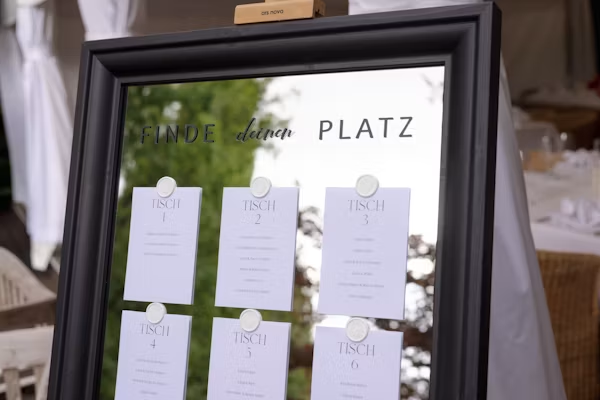
Shop Etsy for a digital interactive seating chart tool. Etsy has a beautifully designed option that lets you manage table assignments digitally.
1. Ditch the Traditional Head Table for a Sweetheart Table
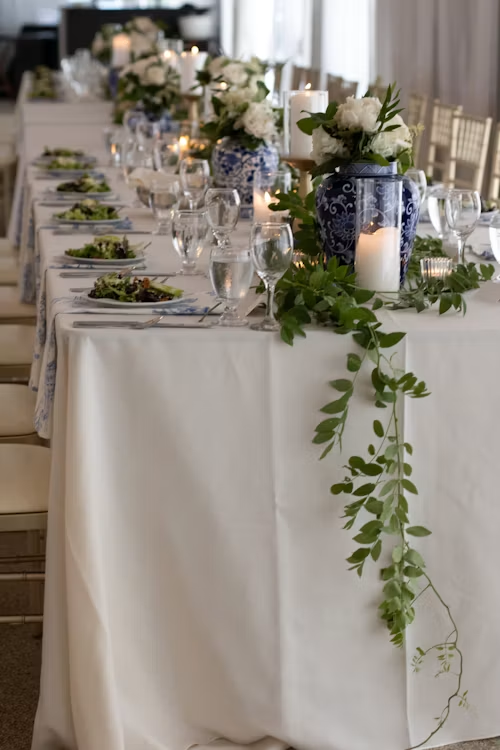
The traditional long head table where the newlyweds sit flanked by their parents or wedding party, facing the room, can be awkward if your parents are divorced or don’t get along.
How to Handle It:
- Option A: The Sweetheart Table: Sit at a private table for two. This allows you to sit with your new spouse without prioritizing one set of parents over another.
- Option B: A Wedding Party Table: Sit with your maid of honor, best man, and wedding party instead of family members.
- Host Tables for Parents: Give each set of parents (and stepparents) their own “Host Table” positioned equally near the head of the room. This makes both sets of parents feel like honored hosts without forcing them to share a conversation for three hours.
Planning your wedding? Before you make another decision, grab my free guide: 25 Things I Wish Every Couple Knew Before Their Wedding Day.
2. Strategic Room Layout: The VIP Placement Rule
When seating relatives who have a history of conflict, sightlines and physical distance are your two best friends.
Real-World Placement Strategies:
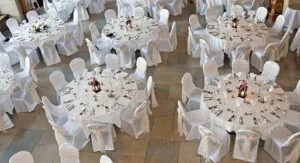
- Equal Distance: Position the tables for estranged relatives or split families at equal distances from the main dance floor or head table so neither side feels slighted.
- Avoid Direct Eye Contact: Angle tables so guests in conflict aren’t facing each other directly across the dance floor. Placing them on the same side of the room (a few tables apart) is often better than facing each other directly across a clear line of sight.
- Buffer Tables: Seat neutral, warm, high-energy guests (like mutual friends, fun cousins, or supportive aunts and uncles) at the tables in between.
If you are navigating complex guest lists from the start, refresh your memory on Wedding Guest List Rules No One Tells You About.
For a free wedding planning checklist and more expert planning tips, sign up below.
3. Buffer Tables and Mixing “Safe” Social Groups
You don’t have to group people purely by strict family categories. Blending social circles slightly can create a much more comfortable environment for everyone.

Real Examples of Groupings:
- The “Fun Cousin” Bridge: Place friendly cousins or younger family members with a parent who might feel isolated or awkward.
- Shared Interests: Group family members with neutral long-time family friends who are natural conversationalists.
- Keep Table Sizes Flexible: If your venue uses circular tables, ask if you can mix 8-person and 10-person tables. A slightly larger table allows you to seat a set of parents with a couple of supportive friends without running out of chairs.
Shop Etsy for personalized wedding place cards; Etsy carries a wide selection of customizable options in every style from minimal to ornate.
4. Handle Divorced Parents With a Specific Script
The most common awkward family seating scenario in 35 years of wedding planning is divorced parents — specifically divorced parents who have not been in the same room together since a difficult separation, and who both have opinions about where they sit relative to each other.
Here is the framework that works:
Communicate with each parent separately before the seating chart is finalized. Ask each of them directly: “Is there anyone you would find it difficult to be seated near?” This surfaces potential problems before they become day-of crises.
Give each parent their own table with people who are unambiguously in their corner. A divorced mother sitting with her best friends and her sister is comfortable and relaxed. The same mother sitting with neutral extended family who maintain relationships with both sides of the divorce is uncomfortable regardless of how carefully you have arranged the room.
Brief your coordinator on the specific dynamic. Your coordinator does not need the full history — they need to know that Table 3 and Table 7 should not interact and that if either parent approaches the other’s table, a gentle redirect is appropriate.
If one parent is bringing a new partner or spouse, seat that couple as a unit with their own social group rather than trying to integrate them with the other parent’s side.
5. Skip the “Single/Plus One” Quarantine Table
Awkward dynamics aren’t limited to parents; unmarried guests or solo attendees often feel uncomfortable when forced into a generic “singles table.”
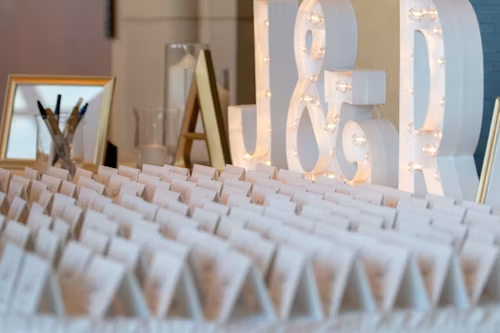
Shop Etsy for place cards.
A wedding website is also a practical tool for managing logistics before the event — couples can collect RSVPs digitally, track dietary restrictions, and communicate event details without the back-and-forth of individual phone calls. WedSites offers a free platform that handles all of this alongside registry links and venue information.
What to Do Instead:
- Seat by Personality: Integrate single friends with established friend groups where they already know at least one or two people.
- Consider Comfort: If a guest doesn’t know anyone, place them with your friendliest, most welcoming guests who love making new friends.
- Focus on Conversation: Make sure every table has a mix of personalities so conversation flows easily throughout dinner service, whether you choose a Buffet vs Plated Dinner for a Small Wedding.
6. Prepare Your Coordinator and Venue Staff
You do not need to play referee on your wedding day. Once your seating arrangement is finalized, delegate the execution to your team.
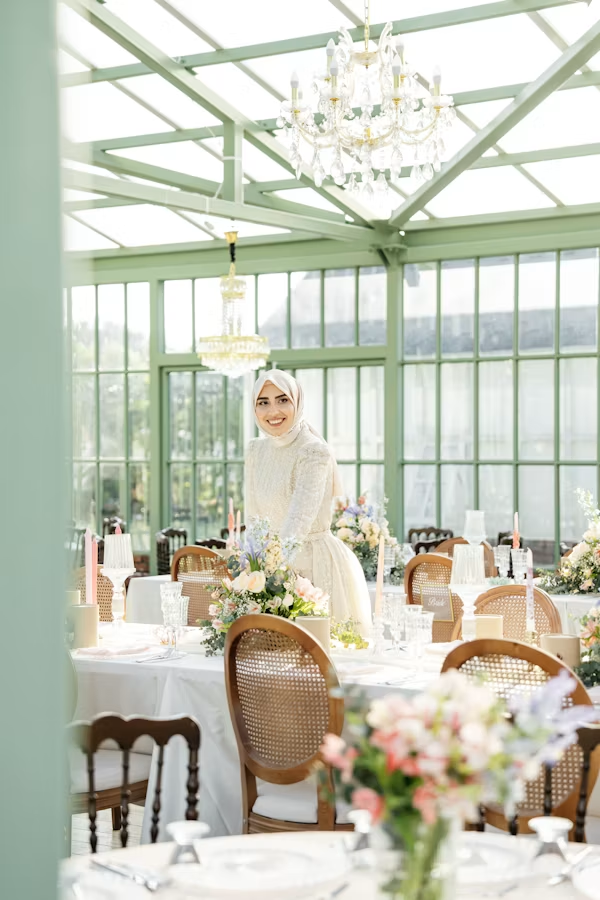
How to Protect Your Peace:
- Brief Your Coordinator: As outlined in What a Wedding Coordinator Actually Does on the Wedding Day, inform your coordinator about any delicate family dynamics beforehand so they can handle last-minute seat-swapping requests or tension discreetly.
- Instruct the Bar Staff: If certain relatives tend to cause drama when overserved, brief your bartender or catering manager to monitor drink limits.
- Assigned Seats vs. Assigned Tables: Use specific assigned seats (with place cards) rather than just assigned tables if you want to ensure specific people sit at opposite ends of the same table.
For brides looking for a meaningful gift to mark this season of the planning process, Miss to Mrs offers beautifully curated personalized gift boxes designed specifically for the engaged bride.
7. Build a Buffer Strategy for the Ceremony Too
The seating chart challenge does not begin at the reception. For couples with estranged family dynamics, the ceremony seating is equally fraught — particularly for divorced parents who are expected to sit in adjacent rows.
The traditional seating arrangement places the bride’s family on one side, and the groom’s on the other, with parents in the front rows. When parents are divorced and accompanied by new partners, this arrangement requires decisions that feel diplomatic rather than instinctive.
Options that work well:
Use ushers intentionally. Brief them on which family members should be seated first and which should be directed to specific seats rather than being given a choice.
For divorced parents sitting in the front row, place them at opposite ends of the same row with their respective support people between them — rather than next to each other.
For particularly difficult dynamics, consider two rows of reserved seats rather than one, allowing each parent to occupy a separate row directly behind the couple with clear visual sight lines to the altar.
Frequently Asked Questions About Wedding Seating Charts
This is why having assigned place cards is essential. If a guest asks to switch, your wedding coordinator or venue staff can politely inform them that caterers require strict adherence to the seating chart for meal service and headcounts.
Yes. Communicating the seating arrangements to divorced or estranged parents 2 to 3 weeks before the wedding prevents unexpected reactions or drama on the day of the event. Frame the placement positively by focusing on how close they are to the dance floor or sweet treats!
For weddings with more than 30–40 guests, open seating often creates more drama rather than less. Latecomers get separated from their partners, families get split up, and awkward dynamics flare up as people scramble for prime spots. Taking control of the chart eliminates the scramble.
Give each parent their own dedicated “host table” positioned at equal distances from the sweetheart table or dance floor, so neither parent feels slighted by proximity. Seat each parent with people who are genuinely in their corner — close friends, their own siblings, their current partner if applicable. Avoid placing them on directly opposite sides of the room where they must face each other, and avoid placing them close enough that conversations carry. Equal but separated is the goal.
Yes — for guests whose placement required particularly careful thought, a brief heads-up two to three weeks before the wedding prevents awkward discoveries on the day itself. Frame the communication positively: “We wanted you to know you will be seated near the dance floor with Aunt Susan and Uncle Tom, who are so excited to see you.” This is especially important for divorced parents with strong opinions about their placement relative to the other parent.
Only if they have a genuinely cordial relationship and both parents are comfortable with this arrangement. When in doubt, separate them. The slight logistical inconvenience of two parent tables is far preferable to an uncomfortable dinner for everyone seated nearby if the dynamic is tense. When stepparents are involved, the rule is simple: the more tables, the less friction.
This is where assigned place cards and a briefed coordinator become essential. If a guest moves their place card or seats themselves incorrectly, your coordinator can politely but firmly direct them to their assigned seat by referencing catering requirements: the caterer needs exact seat counts for meal service, and guests in the wrong seat may not receive the correct meal. This removes the personal dynamic entirely and makes the seating assignment about logistics rather than preference.
Acknowledge their concern warmly and briefly, then hold the line: “I completely understand, and I want you to be comfortable. We have given a lot of thought to every table assignment, and I am confident you will have a wonderful time.” Do not negotiate. The moment you move one complaining guest, every other guest with a preference learns that complaining produces results. Respond with warmth, explain that the seating is finalized, and change the subject. Your coordinator can help manage these conversations closer to the wedding day.
Final Thoughts
The seating chart is the most intimate logistical decision in wedding planning because it requires you to hold your guests’ relationships, histories, and comfort levels in your mind simultaneously. For most couples, that is an exercise they have never done before at this scale.
For more insider wedding tips, I compiled 25 Things I Wish Every Couple Knew Before Their Wedding.
If you are looking for more ways to personalize your wedding, this blog gives you 12 ways to make your wedding feel like you.
What I tell every couple navigating a complicated seating chart is the same thing I tell them about every other planning decision that involves other people’s feelings: you cannot control how your guests behave, and you cannot engineer a perfect dynamic between people who have chosen not to have one. What you can do is minimize the opportunities for friction, maximize the comfort of every individual, and arrive on your wedding day knowing you did everything thoughtful and reasonable.
The rest is up to them. And in 35 years, most guests rise to the occasion.
For more guidance on navigating complex family dynamics in wedding planning, the Top 10 Problems Couples Face guide covers the situations I encounter most often and the frameworks that consistently help; and the Wedding Guest List Guide covers how to make the difficult guest list decisions that set the seating chart up for success.
Chris Ramsay is a wedding planner with over 35 years of experience in hospitality, country clubs, and event planning. She shares practical wedding advice, budget-friendly ideas, and real-world tips to help couples plan stress-free weddings at Well Chosen Weddings. Learn more about her on her about page.