After 35 years in the wedding business, I can tell you that almost every couple has a few wedding budget fights during planning. Some are brief and forgotten by dinner. Others settle in and quietly affect everything, from how you shop for vendors to how you talk to each other on a Tuesday night.
This post contains affiliate links. I earn a commission on purchases made through these links at no additional cost to you.
If you are in the middle of one of those arguments right now, nothing is wrong with you or your relationship. The wedding budget is where planning stops being a pleasant idea and becomes a series of real decisions with real price tags. That is a tough moment for any two people.
This guide explains why wedding budget fights happen, which ones come up most often, and how to settle them in a way that leaves you on the same side of the table when you are done.

Why Wedding Budget Fights Happen
A wedding budget argument is rarely only about money. The numbers are the visible part, but underneath them sit questions that neither of you may have talked through before.
You each bring your own history with money. One of you may have grown up watching every dollar, while the other was taught that experiences are worth paying for. Neither view is wrong, but they collide quickly when you are deciding whether a $400 centerpiece order is reasonable.
Most couples also have no reference point. Very few people have bought a venue, a caterer, a photographer, and a florist in the same year before. Prices feel arbitrary, and it is easy to feel either shocked or pressured to spend more than you planned.
Then there is the outside noise. Social media, parents, friends, and vendors all have ideas about what a wedding should include. A budget disagreement often turns out to be a disagreement about which of those ideas matter to the two of you.
Understanding this helps, because it changes the goal. You are not trying to win the argument. You are trying to learn what each of you values and build a plan that respects both.
The Most Common Wedding Budget Arguments
Most budget fights fall into a handful of patterns. See whether yours is in here.
You Disagree on the Total
One partner is comfortable spending a figure that makes the other uneasy. This usually reflects different comfort levels with savings and debt, not a lack of care about the wedding.
One of You Wants to Splurge, and the Other Wants to Save
This one is common and very workable. You may simply care about different parts of the day. One person pictures great food and a full bar, while the other cares most about photography or live music.
Parents Are Contributing and Have Opinions
Family money can be a generous gift, and it can also come with expectations that were never said out loud. This is one of the trickiest situations I see, and I cover it in its own section below.
The Budget Keeps Growing
You set a number, then a venue visit, a florist consultation, and a few small upgrades later, you are well past it. Nobody made one big decision, but the total has moved anyway.
The Guest List Is Driving the Cost
Most venues and caterers price by the guest, so the guest count affects food, drinks, rentals, and sometimes the size of the space you need. If the budget feels impossible, the guest list is often the real issue, and it can become a fight of its own.
For detailed advice on wedding guest lists:
- Wedding Guest List Rules No One Tells You About
- How to Control The Wedding Budget’s Biggest Threat: The Guest List
One of You Is Making All the Money Decisions
Sometimes one partner researches, books, and pays while the other is not really involved. That can build resentment on both sides, either from feeling overloaded or from feeling shut out.
Start With a Money Conversation That Is Not About the Wedding
Before you divide the budget into categories, have a broader conversation about money. It sounds like a detour, but it prevents many of the arguments that follow.
Sit down at a calm time, not after a vendor call or in the middle of a disagreement, and talk through a few questions:
- How much are each of you comfortable spending in total, and where would that money come from?
- Is there an amount that would make you uncomfortable to spend, even if you could technically afford it?
- How do each of you feel about taking on debt for a wedding?
- Are there other financial goals, such as a home purchase or paying off loans, that this budget should not interfere with?
I am a wedding professional, not a financial advisor, so if your finances are complicated or you are unsure what is safe to spend, a conversation with a financial professional is worth having. The point here is simpler. Agree on a ceiling that both of you can live with before you start shopping. Every vendor quote after that is measured against a number you both chose.
One of the clearest signs of budget stress shows up before a couple has even toured a venue. They come in with one set of parents, and when the price is mentioned, everyone looks at each other. I can tell right away that they have not had the budget conversation yet. They do not know who is paying, who is contributing, or even a ballpark figure they have to work with. That tells me they are not quite ready to start touring venues, and I usually encourage them to have that conversation first. It saves everyone time and a good deal of awkwardness.
How to Settle a Wedding Budget Disagreement
Once you have a total, use a process instead of debating each purchase. Structure takes the emotion out of it.
- Separate the number from the vision. Agree on the total first. Only then talk about how to spend it.
- Each write down your top three priorities privately. Do not compare yet. This keeps one person’s opinion from shaping the other’s.
- Compare your lists. You may find more overlap than you expected. Where you differ, that is where the real conversation needs to happen.
- Decide where you will splurge and where you will save. Protect the priorities you both share, then give each person one area that matters especially to them.
- Build in a contingency. Setting aside 5 to 10 percent of the budget for surprises prevents the “we went over again” argument. I would treat this as part of the plan rather than a failure of it. My post on hidden wedding costs shows where those surprises usually come from.
- Assign ownership. One person leads each category, within the agreed range. That ends the constant renegotiating and spreads out the planning load.
- Schedule a regular money check-in. Twenty minutes, same time each week while you are booking vendors, then once a month after the major deposits are paid, with a rule that wedding money does not come up outside it. This one habit stops budget talk from taking over every evening.
Here is how this might look in practice. Imagine one partner ranks live music first and the other ranks photography first. Instead of arguing over which matters more, you agree to put extra money into both and trim a category neither of you cares about, such as elaborate centerpieces or favors. Nobody gave up what they love, and the total stayed the same.
For help setting the total and dividing it up, my post on the wedding budget breakdown walks through how to allocate your money across categories.
What to Say When the Conversation Gets Tense
How you start a budget conversation affects how it ends. A few phrases tend to help:
- “I want us to be on the same side of this. Can we look at the numbers together?”
- “Help me understand what matters most to you about this.”
- “I am not saying no. I am trying to figure out where this fits.”
- “Can we pause this and come back to it tomorrow when we have both had a break?”
Taking a break is not avoidance. If the conversation is heated, a pause helps. Just agree on a time to return to it, so the subject does not quietly go unresolved.
When Parents or Family Are Contributing
If family is helping pay, have a direct conversation early, ideally before you book anything major. Make sure the two of you have had the money conversation described above first, so you know where you stand before you talk to anyone else. Then ask kindly and plainly:
- How much would you like to contribute, and when would the money be available?
- Is it for the wedding in general, or for a specific part of it?
- Do you have anything in mind that you would like included?
Having these conversations separately with each set of parents helps avoid comparisons and misunderstandings. Many family conflicts come from assumptions that never got spoken. A parent may believe that paying for the venue means having a say in the guest list, while the couple believes it was a gift with no conditions.
If the guest list is where those expectations show up, my post on wedding guest list rules covers how to handle it.
Decide with your partner, before you talk to anyone, what you are willing to accept and what you are not. Then it is easier to respond calmly. A simple written note of the amount and the timing, shared by email, can also prevent confusion later. If larger sums or complicated terms are involved, check how that affects your own finances.
If a contribution comes with conditions that do not suit you, it is acceptable to decline it or to scale the wedding to what you can afford on your own. A smaller wedding with a peaceful engagement is worth more than a larger one that strains your family.
I once worked with a bride and her mother who were a good example of how this plays out. The mother was paying for the flowers, and she wanted them to be over the top, and they were. The bride and groom, who were paying for the rest of the wedding, would have preferred that much of that money go to other areas instead of one big splurge. I suggested to the mother that the flowers could come down a notch and still be breathtaking, and that some of the budget could go toward other decor, such as upgraded linens, welcome signage, and a seating chart display. She gave in a little, and the flowers were still beautiful. The couple got a more balanced look, and the mother still felt her contribution made a real difference.
Let the Numbers Settle the Argument
Many budget arguments soften once couples see where the money is truly going. In most weddings, the venue and food and beverage take up the largest share, and both are tied closely to the guest count. That is why changing the guest list often does more for the budget than cutting a dozen small items.
I will not repeat the full category breakdown here. My wedding budget breakdown shows the percentages, the dollar amounts at three budget levels, and where to save and where to spend. Pull it up together before your next money conversation, so you are both working from the same numbers instead of guesses.
Pricing varies widely by region, venue, and vendor, so check actual quotes in your area before you rely on any estimate. Weddings at every budget can be beautiful and meaningful, and a smaller number does not make your day any less important.
Warning Signs It Is Time to Pause or Get Help
Occasional disagreement is normal. A few patterns suggest you need more support than another conversation:
- The same argument keeps returning without any resolution.
- One partner is hiding spending or avoiding the topic.
- The budget is creating real financial worry, or you are considering debt you are not comfortable with.
- Money conversations leave one of you feeling dismissed or controlled.
In those cases, it can help to speak with a financial professional about the numbers, or a counselor about the communication. Asking for help at this stage is a sign of taking the relationship seriously. If the broader pressure of planning is wearing on you both, my post on wedding planning stress offers more ways to protect your relationship during this process.
Tools That Make Budget Conversations Easier
A shared tracker does a lot of the work of reducing arguments, because both of you see the same numbers at the same time. Whether you prefer a spreadsheet, a printed planner, or a budgeting app, choose one place where every quote, deposit, and payment date lives.
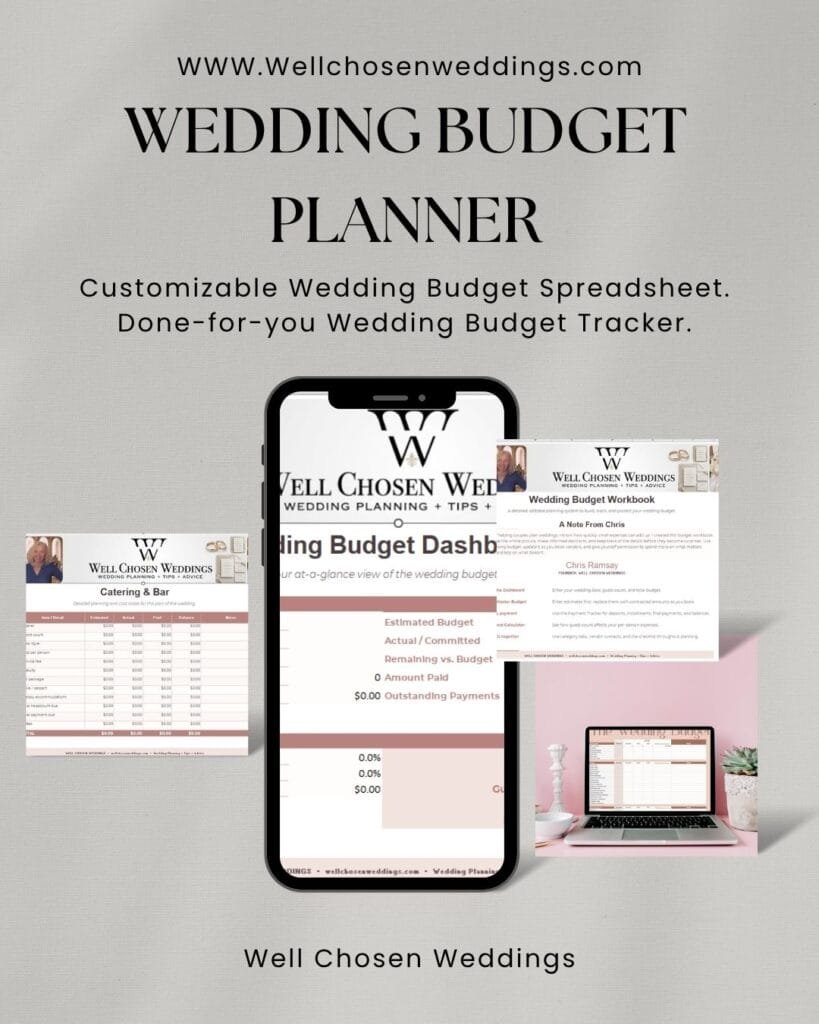
I created an editable wedding budget planner to help you track all of your expenses, deposits, and guests.
Frequently Asked Questions
Yes. Money is one of the most common sources of disagreement during wedding planning. Arguing does not mean you are headed for trouble. What matters is whether you can talk it through and reach a plan you both accept.
Start with what you can both comfortably afford without disrupting other financial goals, then agree on a ceiling before you look at vendors. If family is contributing, confirm the amount and timing before you rely on it. For anything involving significant savings or debt, consider speaking with a financial professional.
Separate the total from the priorities. Agree on the number first, then each rank your top three priorities and find the overlap. Often both people can get the things that matter most to them by trimming areas that matter less.
Talk early and directly about what the contribution is for and whether it comes with expectations. Decide with your partner beforehand what you are willing to accept. If conditions do not feel right, you can adjust the scale of the wedding or decline the contribution.
Build a contingency into the plan from the beginning, and review spending in regular check-ins so small increases do not pile up unnoticed. If you do go over, decide together where to make up the difference instead of letting it become a source of blame.
Your wedding budget affects nearly every decision you’ll make during the planning process. Have additional questions about wedding costs, unexpected expenses, or where to save? Visit my Wedding Planning FAQs for more helpful answers.
Final Thoughts
If I could leave you with one idea, it is this: the goal of a wedding budget is not to impress anyone. It is to support the day you want while keeping your relationship strong. A couple who has learned to talk honestly about money before the wedding has already built something that will serve the marriage far longer than any centerpiece.
Be patient with each other. Have the conversations early, agree on a number you both trust, and keep checking in. The wedding will take care of itself far more easily when the two of you are on the same team.
Chris Ramsay is a wedding planner with over 35 years of experience in hospitality, country clubs, and event planning. She shares practical wedding advice, budget-friendly ideas, and real-world tips to help couples plan stress-free weddings at Well Chosen Weddings. Learn more about her on her about page.
Make Wedding Planning Easier
Planning a DIY wedding means keeping track of more than decorations. You also have a budget to manage and a wedding day to organize. I created these shortcuts to help you with your wedding planning.
Wedding Budget Tracker
Keep your wedding expenses organized and see exactly where your money is going.
Wedding Day Timeline
Keep your wedding day organized so you know what needs to happen and when.