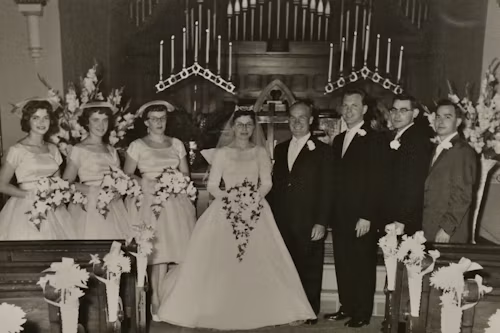
Over my 35 years of guiding couples through the wedding planning process, I have watched the Friday night before the wedding undergo a total transformation. Decades ago, the pre-wedding evening was strictly reserved for a formal, highly structured rehearsal dinner. The guest list was limited strictly to immediate family members, the officiant, and the wedding party.
However, as travel habits have changed and wedding weekends have become multi-day destination experiences for guests. That traditional format often creates friction. Couples would spend Friday night trapped in a formal three-course dinner. While dozens of out-of-town guests sat in hotel rooms, wondering where to get dinner on their own.
This post contains affiliate links. I earn a commission on purchases made through my links at no additional cost to you.
The Evolution of the Pre-Wedding Evening
Today, the wedding welcome party has officially taken center stage. As a veteran planner, I view this shift as one of the best developments in modern wedding design. Replacing or expanding the traditional rehearsal dinner with an informal, high-energy welcome party sets a warm, joyful tone for the entire weekend. If you are debating whether to host a welcome party, this guide will walk you through the history, the operational benefits, creative formats, and essential planning secrets.

What Is a Wedding Welcome Party?
A wedding welcome party is a gathering hosted the day before the wedding ceremony to greet arriving guests and launch the weekend celebrations. Unlike the traditional rehearsal dinner, which is an intimate, seated meal focused on formal toasts and ceremony walk-throughs. The welcome party is relaxed, interactive, and open to a much broader guest list.
For a complete guide to the traditional rehearsal dinner format and when it still makes sense, the What Is a Rehearsal Dinner guide covers everything couples need to know.
Depending on your preference and budget, a welcome party can take several distinct operational shapes:
- The Full Replacement: Skipping the traditional sit-down rehearsal dinner entirely and hosting a casual, party-style gathering for all attending guests.
- The After-Party Hybrid: Hosting a brief, private dinner for immediate family from six until eight in the evening. Followed by an open-door welcome cocktail hour for all out-of-town guests from eight until ten.
- The Standalone Pre-Weekend Event: Hosting an informal activity. Such as a backyard barbecue, a brewery night, or a sunset boat cruise, two nights before the wedding day.
Why Modern Couples Are Embracing the Welcome Party
The shift toward hosting a welcome event is driven by a desire for meaningful connection and hospitality. Here is why modern couples are prioritizing this event in their wedding budgets.
1. No Wedding Party Means No Need for a Traditional Ceremony Rehearsal
One of the primary historical reasons for a rehearsal dinner was to feed the attendants after walking through a complex ceremony processional. However, if you have decided to skip having a formal wedding party, you no longer require a full ceremony rehearsal.
Without six to twelve bridesmaids and groomsmen to align in specific order, your ceremony walk-through takes less than ten minutes, or can be skipped entirely. Without the need to practice walking down the aisle, sitting down for a rigid, post-rehearsal meal feels unnecessary. Transitioning that time directly into an open welcome party creates a far more valuable experience for everyone involved.
2. Maximizing Quality Time with Every Guest
The single most common regret I hear from couples after their wedding day is that the event went by too fast and they barely got to speak to their guests. On the wedding day itself, your time is tightly structured between getting ready, taking formal photos, ceremony logistics, first dances, and dinner service.
A welcome party breaks that pressure valve completely. By greeting your guests the night before, you get to have real, unhurried conversations with your favorite people. When the reception arrives the next day, you can dance and enjoy yourself without feeling guilty about missing anyone.
3. Showing Hospitality to Traveling Guests
Attending a wedding today often requires a significant investment of time and money from your friends and family. Guests purchase flight tickets, book hotel rooms, arrange childcare, and take time off work.
Hosting an informal gathering on the night they arrive shows immediate gratitude for their effort. It ensures that out-of-town travelers feel warmly received the moment they land. Rather than being left to navigate an unfamiliar town alone.
4. Icebreaking for Your Social Circles
Every wedding brings together different pockets of your life: childhood friends, college roommates, extended relatives, and work colleagues. When these groups meet for the first time at the wedding reception, it can take hours for the room to warm up.
A relaxed welcome party acts as the ultimate icebreaker. Guests meet, mingle, and establish rapport over casual food and drinks. By the time the wedding reception rolls around twenty-four hours later, the energy in the room is already elevated because everyone feels like old friends.
For guidance on who to include on the welcome party guest list alongside the wedding guest list, the Wedding Guest List Guide covers the decisions couples find most complicated.
5. Showcasing Personal Style and Local Flavor
Wedding receptions often follow specific formal guidelines regarding decor, linen choices, and timelines. The welcome party offers total creative freedom.
This event allows you to highlight your favorite local foods, casual passions, or geographic charm. Whether you host a taco bar at a local brewery, a clam bake on the beach, or a pizza party at an art gallery, you can showcase a side of your personality that might not fit into a traditional wedding reception.
For bridesmaids looking for the perfect gift to present at the welcome party, a Miss to Mrs personalized gift box makes a beautiful and meaningful keepsake for the bride at the start of the wedding weekend.
6. It Removes the Financial and Logistical Pressure From the Rehearsal Dinner
The traditional rehearsal dinner places significant logistical and financial pressure on the groom’s family. They historically host and pay for it. This convention creates friction in blended families, second weddings, and situations where the financial dynamics do not follow the traditional pattern.
A welcome party replaces this expectation with a shared celebration hosted by the couple themselves. This removes the ambiguity about who is responsible for what and gives both families equal footing in the pre-wedding celebration.
5 Creative Welcome Party Ideas for Every Budget
You do not need to double your wedding budget to host a fantastic welcome party. The key is to keep the atmosphere distinctly different from the wedding day itself.
- Brewery or Taproom Takeover: Rent a private room or patio at a local craft brewery. Provide wood-fired pizzas, pretzels, and drink tokens for a completely stress-free evening.
- Sunset Cocktails and Desserts: Host a late-evening gathering from 8:00 pm to 10:00 pm. Serve specialty cocktails, champagne, and a lavish dessert spread after guests have eaten dinner on their own.
- Backyard Family Barbecue: Utilize a family member’s home or a rented estate for an informal barbecue featuring lawn games, acoustic music, and comfort food.
- Food Truck Fiesta: Reserve a park pavilion or courtyard. Hire two or three local food trucks to serve tacos, burgers, or ice cream sandwiches.
- Cultural or Regional Tasting: Introduce traveling guests to your location’s signature flavors. Such as a seafood boil in coastal towns, a wine tasting in vineyard regions, or a whiskey flight in historic cities.
Welcome Party Planning Timeline and Checklist
The welcome party often gets left until the final weeks of wedding planning because it feels less urgent than the wedding itself. In my experience, this is a mistake. Vendors for informal events book up just as quickly as formal caterers. A last-minute welcome party always shows in the execution.
For the complete month-by-month wedding planning framework, the Wedding Planning Timeline covers every vendor decision in the correct sequence.
Four to Six Months Before:
- Decide on the format — full replacement, after-party hybrid, or standalone event
- Set a per-person budget — welcome party costs typically run $25 to $75 per person depending on format
- Book any venue that requires a reservation — breweries, private dining rooms, and boat cruises book quickly
- Decide on the guest list — all wedding guests, out-of-town guests only, or a hybrid
Two to Three Months Before:
- Send save-the-dates or add the event details to your wedding website
- Book catering, food trucks, or restaurant arrangements
- Arrange any entertainment — lawn games, live music, a local band
- Confirm whether you need rental equipment — tables, chairs, lighting
Four to Six Weeks Before:
- Send formal invitations if using paper — or activate the digital RSVP on your wedding website
- Confirm all vendor bookings
- Plan the run-of-show — arrival time, food service timing, any toasts or remarks
One to Two Weeks Before:
- Finalize RSVPs and communicate the final count to caterers
- Confirm travel logistics for any guests who need pickup from the airport or hotel
- Prepare any welcome materials — a printed weekend schedule, a map of local restaurants
Essential Tools to Plan Your Multi-Day Wedding Weekend
Managing RSVPs and logistics for two separate events — the welcome party and the wedding — requires a reliable, centralized system. A wedding website is the most practical tool available for this. Guests can RSVP to both events digitally. Review the weekend schedule, and find hotel and transportation details in one place rather than managing it all through text messages and email threads.
WedSites offers a free wedding website platform that handles all of this beautifully. It includes a dedicated weekend itinerary page where you can list the welcome party details alongside the wedding day information.
Frequently Asked Questions About Wedding Welcome Parties
While traditional rehearsal dinners are restricted to immediate family and the wedding party. Welcome parties are typically open to all out-of-town guests or the entire wedding guest list. If your budget is limited, you can restrict the invitation list to guests traveling from outside the local region.
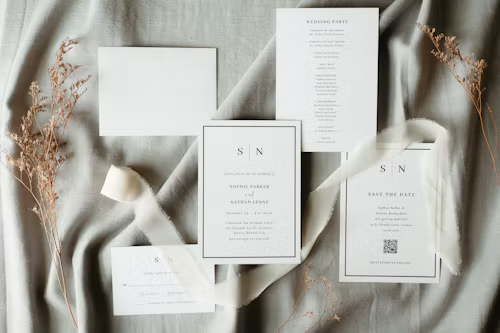
You can include a dedicated enclosure card inside your formal wedding invitation suite. Or list the event on your wedding website with an electronic RSVP function. Be sure to specify whether dinner will be served or if the event is for light bites and drinks only.
No, you do not need to serve a full three-course meal. However, if your event takes place during traditional dinner hours between six and eight in the evening, you must provide substantial food such as heavy appetizers or food stations. If you host the party later, such as eight in the evening, light snacks and desserts are entirely appropriate.
The dress code should be distinctly more casual than the wedding day to set a relaxed tone. Popular attire descriptors include dressy casual, festive chic, or smart casual. Be sure to note the dress code clearly on the invitation so guests know what to wear.
Welcome parties are wonderful venues for casual toasts from friends or family members who are not speaking during the formal wedding reception. Keep speeches brief, lighthearted, and spontaneous to maintain a relaxed party atmosphere.
A wedding welcome party typically costs between $25 and $75 per person depending on the format and location. A casual backyard barbecue or park gathering with food truck service sits at the lower end of that range. A private restaurant buyout with a full open bar sits at the higher end. The most cost-effective format is a late-evening dessert and cocktail gathering starting at 8:00 pm. This naturally limits expectations for a full dinner service while still creating a warm, festive atmosphere.
No — and this is one of the most valuable aspects of the welcome party format. Keeping the two events distinctly different in tone creates a satisfying arc across the weekend. If your wedding is formal and elegant, make the welcome party casual and personal. If your wedding is outdoors and relaxed, the welcome party can still feel different by choosing a different setting or a different food and drink format. Guests who experience two events with the same energy across two days often describe the weekend as repetitive rather than celebratory.
Not necessarily. If you are hiring the same day-of coordinator who manages the wedding, confirm in advance with them whether the welcome party falls within their contracted scope. Many coordinators include one pre-wedding event within their package; others bill it as an add-on. For very informal welcome parties — a backyard gathering or a brewery night — the couple or a trusted family member can manage the logistics without professional coordination. The more vendors involved and the larger the guest count, the more a coordinator earns their fee.
For couples looking for attire inspiration that bridges the gap between wedding-day formal and welcome-party casual. AW Bridal offers a wide selection of options at accessible price points.
Final Thoughts from a Veteran Planner
In my 35 years as a wedding planner, I have learned that the best weddings are those where guests feel valued, comfortable, and connected. A welcome party sets the stage for a celebratory, stress-free weekend where everyone feels included from the moment they arrive.
If you want to create an unforgettable multi-day celebration for your loved ones, embrace the flexibility of the welcome party and enjoy every second of your engagement.
For more guidance on creating a multi-day guest experience your guests genuinely remember, the Ultimate Wedding Guest Experience Guide covers every detail from welcome bags through the send-off.
Chris Ramsay is a wedding planner with over 35 years of experience in hospitality, country clubs, and event planning. She shares practical wedding advice, budget-friendly ideas, and real-world tips to help couples plan stress-free weddings at Well Chosen Weddings. Learn more about her on her about page.
For couples managing a full wedding weekend schedule. From the welcome party through grand exit. A professionally designed timeline with built-in buffers makes the difference between a smooth weekend and a chaotic one.
Make Wedding Planning Easier
Planning a DIY wedding means keeping track of more than decorations. You also have a budget to manage and a wedding day to organize. I created these shortcuts to help you with your wedding planning.
Wedding Budget Tracker
Keep your wedding expenses organized and see exactly where your money is going.
Wedding Day Timeline
Keep your wedding day organized so you know what needs to happen and when.