After 35 years of planning weddings, some of the most joyful celebrations I have been part of were second weddings. Not because second weddings are inherently more relaxed, though they often are, but because the couples planning them have a clarity that first-time couples rarely possess. They know what mattered last time and what did not. They know who they want in the room. They know what they would have done differently.
That perspective is one of the greatest gifts a second wedding brings. This guide covers everything you need to plan a second wedding that reflects who you are now, honestly and completely, with specific guidance on the questions that are genuinely different the second time around.
For the full step-by-step planning framework that applies to every wedding regardless of whether it is a first or second celebration, the Ultimate Wedding Planning Guide covers every vendor decision in the correct order.
This post contains affiliate links. As an affiliate, I earn from purchases made through my links at no additional cost to you.
Whether this is a remarriage, a later-in-life wedding, or a second celebration after a small ceremony, planning a second wedding allows you to do things with intention. This guide walks you through what’s different, what actually matters, and how to plan a second wedding that feels meaningful, comfortable, and completely your own.
How Planning a Second Wedding Is Different From Your First Wedding
Most of the logistics of wedding planning are identical regardless of how many times someone has been married. You still need a venue, a photographer, an officiant, a guest list, and a timeline. The planning sequence is the same. The vendor negotiations are the same. The checklist is largely the same.
What is genuinely different about a second wedding falls into five categories:
The emotional context is different. A second wedding is not a first beginning; it is a continuation, often one that follows loss or difficulty, and the celebration deserves to acknowledge that without being defined by it.
The family dynamics are more complex. Children from previous relationships, extended families who maintain relationships with former spouses, and guests who attended the first wedding all require thoughtful navigation.
The financial structure is often different. Most second-wedding couples fund the celebration themselves rather than relying on parental financial contribution, which typically means a more focused budget and a more deliberate set of priorities.
The registry is a different conversation. Couples who have been living independently, often for years, typically do not need household essentials in the way first-time couples do.
The etiquette questions are different. What color dress is appropriate? Is it acceptable to have a full wedding party? Can you have a white wedding? Can you ask for gifts? These questions do not have the same clear conventional answers for second weddings that they do for first ones.
Each of these is addressed specifically in this guide.
Second Wedding Checklist — Month by Month
Use this checklist alongside the full planning timeline. For the complete month-by-month planning schedule with vendor booking windows, the Wedding Planning Timeline guide covers every decision in sequence.
12 Months Before (or as early as possible)
- Set your budget independently of any parental contribution
- Establish your guest list, name by name, not a rough number
- Discuss children’s roles with your partner and with the children themselves
- Choose your venue and book it
- Book your photographer, the most important vendor booking of the entire process
- Discuss registry format and set it up
8 to 10 Months Before
- Book your officiant and confirm any remarriage policies
- Book your caterer or confirm venue catering
- Begin dress or attire shopping; alterations require time
- Book your florist if using one
- Set up your wedding website
6 Months Before
- Send save the dates
- Finalize ceremony structure including any unity elements involving children
- Book music, DJ, band, or ceremony musicians
- Begin writing personal vows if you are including them
- Book hair and makeup
3-4 Months Before
- Send formal invitations
- Finalize children’s ceremony roles and discuss with them specifically
- Schedule dress fittings
- Book transportation
1-2 Months Before
- Confirm all vendors in writing
- Finalize the ceremony order with your officiant
- Submit the family formal shot list to your photographer
- Confirm RSVPs and finalize seating
- Purchase rings if not yet done
Two Weeks Before
- Share the day-of timeline with all vendors
- Confirm rehearsal details
- Prepare vendor tip envelopes
Wedding Week
- Confirm all final details with venue
- Rehearsal and rehearsal dinner
- Rest
The Guest List for a Second Wedding
The guest list decision is the one that shapes everything else: the venue, the budget, the format, and the tone of the celebration.
There is no rule that a second wedding must be small. The idea that second weddings should be quiet civil ceremonies followed by a small luncheon is an etiquette convention from a generation ago that virtually no one follows anymore. The only meaningful guest list guideline that still carries weight is this: whoever you invite to a second wedding should be someone you genuinely want present for one of the most significant moments of your life.
That is also true of first weddings, of course. The difference is that second-wedding couples tend to be better at applying it.
The specific question that arises most often is about repeat guests, people who attended the first wedding and are now being invited to the second. There is nothing inappropriate about this. People who care about you want to celebrate with you. Invite the people who matter.
The guest list decision that requires the most thought in a second wedding context is around the former spouse’s family members, siblings, parents, cousins- who may have remained genuinely close to one or both partners after the marriage ended. There is no universal answer here. Some of these relationships belong in the room; others do not. Make the decision based on the current quality of the relationship rather than the history of the connection.
For a complete framework for building and managing a wedding guest list, the Wedding Guest List Guide covers the decisions most couples find most difficult.
Whether you have 12 months or 6 months to plan your second wedding, this blog covers the steps to take.

This blog on themes for your wedding may be helpful in your planning.
Second Wedding Etiquette: What Still Matters and What You Can Skip
One of the most common concerns couples have when planning a second wedding is etiquette. There is often uncertainty around what is appropriate and what is unnecessary.
This blog covers what you need to know about wedding etiquette.
The truth is that etiquette for second weddings is not about rigid rules. It is about consideration and clarity. Guests mainly want to know what to expect and how to celebrate with you comfortably.
If you are planning the wedding in an abbreviated timeframe. This post is all about planning a wedding in 3 months.
Some couples opt for a small backyard wedding, a private ceremony, or a destination celebration. Others still love the idea of a formal event with dinner and dancing. Both choices are completely valid.
Should You Follow Traditional Wedding Customs Again?
For the complete guide to planning the wedding ceremony, this blog has a printable checklist.
This blog covers the wedding ceremony order.
You can, but you do not have to.
Many second-time couples choose to skip traditions that no longer feel meaningful, such as bouquet tosses, formal bridal parties, or rigid ceremony scripts. Others keep the traditions they genuinely enjoy and discard the rest.
Walking down the aisle, exchanging vows, and celebrating with loved ones are timeless elements that never need justification. Everything else is optional.
This blog on creating your wedding guest list will help with this.
This blog on wedding etiquette will also be helpful.
If you would like to have an adults-only wedding, this guide will help you with ways to word the wedding invitation.
Children at a Second Wedding
If either partner has children from a previous relationship, their role in the wedding is one of the most emotionally significant planning decisions you will make, and one that deserves considerably more thought than most planning guides give it.
Whether to Include Children
Including children in the ceremony is almost always the right choice when those children are old enough to understand what is happening and when the relationship between them and the couple is warm and established. A child who watches their parent marry someone they love, and trust becomes part of the beginning of something rather than a bystander to it. That experience has genuine long-term value for the family you are building.
Children should not be included in the ceremony if the relationship is new enough that the child is still processing the new dynamic, if the child has expressed significant reluctance or distress about the wedding, or if including them would create more anxiety for the child than joy.
Roles for Children in the Ceremony
The most common and most meaningful roles for children at second weddings:
Ring bearer or flower girl for younger children; a family unity ceremony, such as a sand ceremony or candle lighting, where children physically participate in the symbolic beginning of the blended family. This is one of the most emotionally powerful additions to any second wedding ceremony.
A reading, for older children who are comfortable speaking in front of a crowd, a short reading chosen by the child or selected together with the parent is a meaningful inclusion.
Walking a parent down the aisle, for adult or older teenage children, this reversal of the traditional role can be a genuinely moving moment.
When Children Are Not Ready
If children are not in a place where participating in the ceremony feels right, a separate private celebration between the couple and the children — a special dinner, an activity they love, a trip — communicates that the family is being built together rather than around them
This blog is about new twists on old wedding traditions.
Second Wedding Etiquette — The Questions Everyone Asks
After 35 years of planning weddings and fielding every possible etiquette question, here are the honest answers to the ones second-wedding couples ask most often.
Can a Second-Time Bride Wear White?
Yes, absolutely. The tradition that a second-time bride should not wear white is an outdated convention with no meaningful modern basis. Wear the color that makes you feel most beautiful. White, ivory, champagne, blush, sage, navy — all are appropriate choices for a second wedding. The only consideration is your own comfort with whatever you choose.
What does genuinely change for many second-time brides is that they gravitate naturally toward different styles. Less structural, more relaxed. More personality, less convention. For a wide selection of second-wedding-appropriate gowns across every aesthetic and price point, AW Bridal offers options that suit everything from an intimate garden celebration to a formal evening ceremony.
Budgeting for a Second Wedding
Most second-wedding couples finance the celebration independently, which creates both clarity and constraint. The budget framework is the same as any wedding: venue and catering absorb the largest share, photography is the most important vendor investment, and every other category should be sized relative to your priorities rather than a conventional percentage.
The specific budget difference for second weddings is in the guest list. Because second-wedding guest lists tend to be smaller, the per-guest cost often goes further; a smaller number of people done well is almost always a better experience than a larger number done adequately.
For the complete wedding budget breakdown by category, including the exact percentages that keep each area in proportion, the Wedding Budget Breakdown guide covers every line item.
For a detailed, editable budget worksheet you can fill in and track throughout the planning process, the Well Chosen Weddings Budget Worksheet is available as an instant digital download.
For anything from décor to accessories that you are sourcing independently, Amazon Prime is worth having throughout the planning season for fast, reliable delivery on time-sensitive purchases.
I have created this complete wedding budget worksheet and guide to help you set the wedding budget and track all of your expenses.
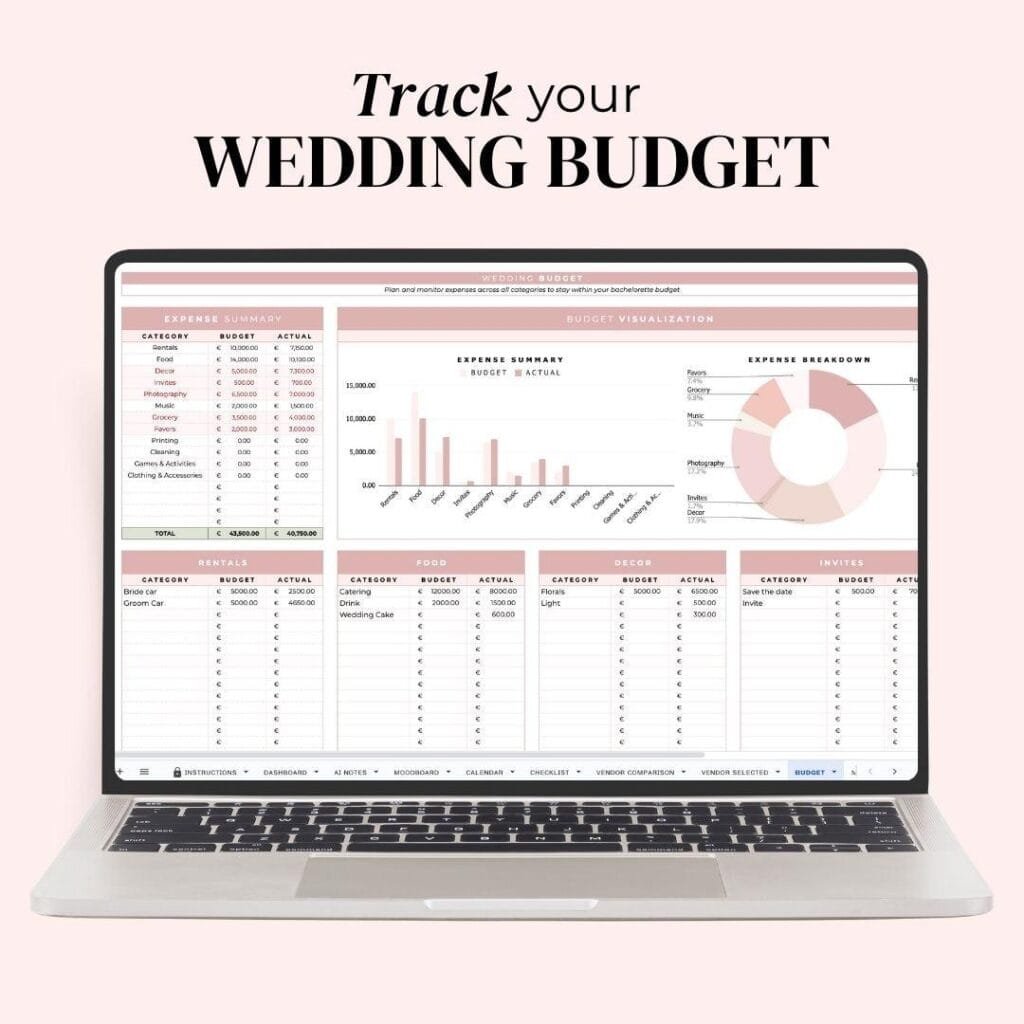
Read this blog for a complete guide to setting your wedding budget.
convertkit form=9247896]Where Couples Often Splurge
Photography is a common priority. Couples understand the long-term value of well-captured memories and are often willing to invest here. This is my complete guide to the 45 wedding photo must-haves.
Food and drink are another area where second-time couples tend to spend more thoughtfully. A great meal, good wine, and a relaxed atmosphere go a long way in creating a memorable experience.
This blog on how to select the food and drinks for your wedding may be helpful.
Where Couples Often Save
Décor is often simplified. Many second weddings rely on beautiful venues, seasonal florals, or minimal design rather than elaborate installations.
Read this blog on DIY wedding decor.
Wedding decor planning for every style is your go-to guide for wedding decor planning.
Guest count is another major cost saver. Smaller weddings naturally reduce expenses across catering, rentals, and stationery.
What to Wear to a Second Wedding
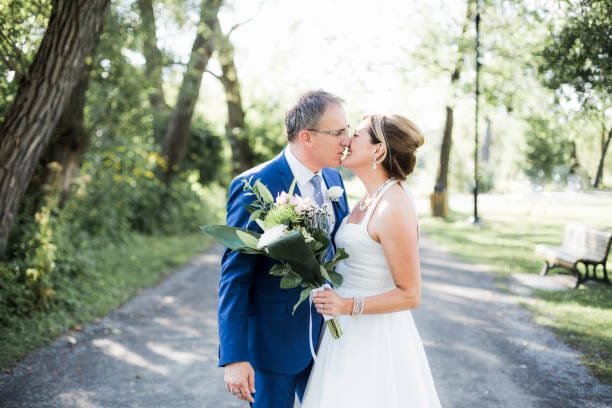
Attire for a second wedding is where many couples feel the most freedom. There are no color rules, style rules, or expectations tied to what you wore before. Most couples tend to be a bit more casual in their attire at a second wedding.
This post offers affordable wedding dress ideas.
The most important factor is comfort and confidence.
Second Wedding Dress Alternatives
Many brides choose nontraditional dresses for their second wedding. Short dresses, simple gowns, jumpsuits, or even elegant separates are all popular choices.
Color is also completely open. Ivory, champagne, blush, and even bold hues are all appropriate. Choose something that feels like you, not something that checks a box.
Amazon has a great selection of dresses and suits that are perfect for a second wedding.
Groom and Partner Attire Options
Suits are far more common than tuxedos for second weddings, especially for daytime or smaller celebrations. Some couples opt for more relaxed attire, particularly for destination or backyard weddings.
This blog is about summer wedding attire.
What matters most is that your attire matches the tone of your wedding and feels comfortable to wear all day.
The Second Wedding Registry
The conventional wedding registry — a list of household items for a couple setting up a home together — often does not apply to second-wedding couples who have been independently established for years. The more relevant registry approaches for most second-wedding couples are:
The experience registry. Honeymoon fund contributions, specific travel experiences, cooking classes, concert tickets, or spa days replace the traditional household items with memories and experiences.
The home improvement registry. For couples combining two households, contributions toward specific home improvements, new furniture, renovation projects, or significant appliances are practical and appreciated.
The charity registry. A registry that directs contributions to a meaningful cause — a charity both partners support, a cause connected to a personal experience — is increasingly popular for second-wedding couples who have everything they need.
The traditional registry with a modern edit. For couples who genuinely do want household items — perhaps because a previous marriage ended and one or both partners is starting fresh — a traditional registry is entirely appropriate.
MyRegistry.com allows you to combine all of these options — traditional registry items from multiple stores alongside a honeymoon fund and a charitable giving option — into one shareable link guests can browse at their convenience. This is the registry format I recommend most consistently for second-wedding couples.
Read this blog on creating your gift registry.
Ceremony and Reception Ideas for a Second Wedding
Second wedding ceremonies often feel more personal and less scripted. Couples tend to focus on meaning rather than tradition for tradition’s sake.
Ceremony Ideas That Feel Thoughtful
Personalized vows are especially common for second weddings. Couples often feel more comfortable speaking from the heart and acknowledging the journey that brought them together.
Family readings, unity rituals that include children, or moments of reflection can add depth without making the ceremony feel heavy.
Reception Ideas Guests Actually Enjoy
Second wedding receptions often prioritize conversation and connection. Cocktail-style receptions, brunch weddings, and restaurant buyouts are all popular options.
Read this blog on 23 interactive wedding ideas.
These formats encourage mingling and keep the focus on celebrating rather than a set schedule.
Planning a Second Wedding Later in Life
Read this blog on Backyard Wedding Decor.
Many second weddings happen later in life, when couples have a clearer sense of themselves and their priorities.
Later-in-life weddings often emphasize comfort, accessibility, and meaningful experiences over trends or spectacle.
Hosting a Wedding That Reflects Your Current Season of Life
Timing, venue choice, and guest experience all matter. Afternoon ceremonies, comfortable seating, and thoughtful pacing can make a big difference for guests of all ages.
This is your opportunity to host a celebration that feels relaxed, welcoming, and aligned with your life today.
When you are planning the honeymoon, this post contains a complete checklist of items to remember.
A Note for the Partner for Whom This Is a First Wedding
If this wedding is a second marriage for one partner and a first for the other, the planning conversation deserves specific attention.
The partner experiencing their first wedding may have expectations and hopes about the celebration that feel complicated to express when the other partner has done it before. Those expectations are completely valid. A first wedding is significant regardless of the number on the other side of the relationship.
The most useful thing I can offer here is this: plan the wedding you both want, not the wedding that feels appropriate for a second marriage. If the partner experiencing their first wedding wants a large celebration, a full wedding party, and a traditional ceremony, those desires belong in the planning conversation with full weight. This is their first and only wedding, and it deserves to feel like one.
Frequently Asked Questions About Planning a Second Wedding
Yes. A second wedding can be as formal or as casual as you want. The key is matching expectations with the experience you’re hosting.
You can, but many couples choose to skip a formal wedding party or keep it very small. Others include close friends or family members in nontraditional ways.
It’s not rude, but many couples prefer alternative registries or no gifts at all. Clear communication helps guests feel comfortable either way.
Absolutely. Destination weddings are especially popular for second weddings, particularly when couples plan a celebration at home afterward for those who can’t attend.
There is no rule against it, and many brides do choose white, ivory, or champagne for a second wedding. That said, plenty of brides use a second wedding as an opportunity to choose a color or style that feels entirely their own, since there is no expectation tied to a previous wedding. The right choice is whatever feels authentic, not whatever tradition suggests.
Use the names of the people actually being invited, addressed warmly and individually when possible. If stepchildren are part of the family and you want to acknowledge that on the invitation or in the program, a simple line recognizing the blended family is both meaningful and appropriate. When in doubt, ask the people involved how they would like to be acknowledged rather than assuming.
Yes, and in some ways more than for a first wedding, because the family dynamics at a second wedding can be more complex. A coordinator who is briefed on the family structure, the children’s roles, and any relationship dynamics worth managing can handle the day-of logistics, so you are not managing them yourself. For a complete picture of what a coordinator handles, the What a Wedding Coordinator Actually Does on the Wedding Day guide explains every role in detail.
Yes. The traditional guidance that a second-time bride should not have a bridal shower is outdated etiquette that most people no longer observe. If your friends want to celebrate you, accept it graciously. The one consideration worth noting is that guests who attended a shower for your first wedding are not expected to attend or give a gift at a second shower — framing the shower as an intimate gathering of close friends rather than a broad invitation list is the most considerate approach.
Here is a simplified checklist to help you stay focused and organized:
- Define your priorities and wedding vision
- Set a realistic budget
- Decide on guest list size and boundaries
- Choose your venue and date
- Decide on attire and ceremony tone
- Determine registry or no-gift preferences
- Plan communication and invitations clearly
- Focus on meaningful details, not perfection
This checklist is intentionally streamlined to reflect the reality of second wedding planning. Less pressure, more intention.
Final Thoughts
A second wedding is not a lesser version of a first wedding. It is a different experience — one shaped by greater self-knowledge, harder-won perspective, and a clearer sense of what actually matters.
After 35 years of planning celebrations at every stage of life, I can tell you that the couples who arrive at a second wedding most at peace are the ones who permitted themselves to plan the wedding they genuinely wanted rather than the one that felt proportionate to a second marriage. They invited the people they loved. They wore what felt right. They built the ceremony around who they are now, not who they were before.
That is not a smaller ambition. That is a clearer one. And the result, in my experience, is almost always one of the most joyful days I witness in this work.
For the complete step-by-step planning guide, the Ultimate Wedding Planning Guide covers every vendor and decision in sequence. For a professionally designed, customizable wedding day timeline to keep the celebration on track from getting ready through the grand exit, the Wedding Day Timeline Template is available as an instant digital download.
Follow me on Pinterest for more planning guides.
Chris Ramsay is a wedding planner with over 35 years of experience in hospitality, country clubs, and event planning. She shares practical wedding advice, budget-friendly ideas, and real-world tips to help couples plan stress-free weddings at Well Chosen Weddings. Learn more about her on her about page.
Make Wedding Planning Easier
Planning a DIY wedding means keeping track of more than decorations. You also have a budget to manage and a wedding day to organize. I created these shortcuts to help you with your wedding planning.
Wedding Budget Tracker
Keep your wedding expenses organized and see exactly where your money is going.
Wedding Day Timeline
Keep your wedding day organized so you know what needs to happen and when.