
Of all the decisions you make while planning your wedding, curating the guest list is often the most emotionally charged. And right at the center of that tension is a question hundreds of couples ask me every single year: “How do we politely tell our guests that we want a ‘no kids’ wedding in your wedding invitation?“
First, let me validate your feelings: It is entirely okay to want an adults-only wedding. Whether it’s due to budget constraints, venue capacity limits, or simply wanting a sophisticated, late-night party vibe where your friends can let loose, you do not need to feel guilty about your choice.
As a professional wedding planner with 35 years of experience, I’ve handled this delicate situation across hundreds of weddings. The secret to an adults-only wedding without the drama isn’t a magical trick—it’s crystal-clear, polite communication.
If you leave any room for assumption, a guest will assume their children are invited. Here is my complete planner’s guide and exact wording templates to help you set boundaries beautifully and explain your ‘no kids’ wedding choice.
This post contains affiliate links. I earn commission on purchases made through these links.
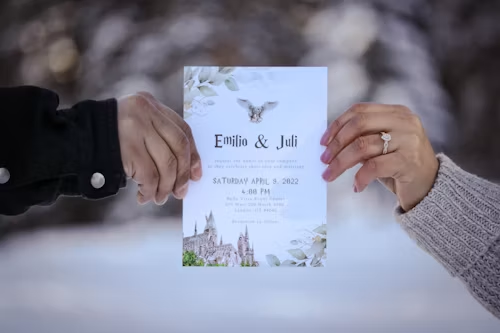
The Golden Rule of “No Kids” Etiquette
Before we look at the templates, there is one rule you must follow: Never write “No Kids Allowed” or “No Children” directly on the main wedding invitation card.
The main invitation card is reserved for the celebratory and formal details of the day. Putting restrictions on it can feel jarring to guests. Instead, place your adults-only boundary in these three strategic locations:
- The Outer Envelope: Explicitly address the envelope only to the adults (e.g., “Mr. and Mrs. John Smith”, not “The Smith Family”).
- The RSVP Card: Include a line that clearly indicates how many seats are reserved.
- The Wedding Website: Use your Q&A or details page to expand politely on the policy.
Exact Wording Templates to Copy and Paste
Depending on your wedding style and your guest list dynamic, choose the tone that fits you best:
Shop Etsy for adults-only invitation inserts.
Love Free Wedding Planning Printables?
Planning your wedding is much easier when everything is organized. I created a free printable library filled with checklists, timelines, worksheets, and planning tools to help you stay on track from “Yes!” to “I do.”
1. The Direct & Elegant Approach (Best for Formal Weddings)
This phrasing is clear, highly traditional, and leaves absolutely zero room for misinterpretation.
- For the RSVP Card: “We have reserved ___ seats in your honor. Please respond by [Date].”
- For the Website/Details Card: “Please note that our ceremony and reception will be an adults-only celebration.”
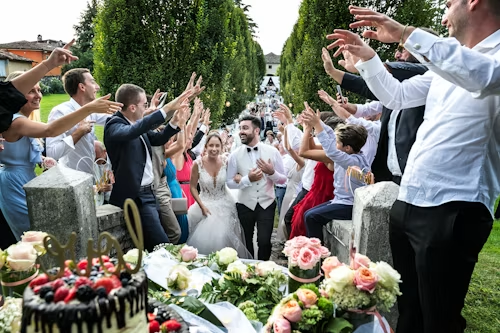
2. The Budget & Venue Restriction Angle (The Most Understanding Tone)
Blaming the venue or the budget is a fantastic way to take the personal sting out of the boundary. It lets guests know it’s a logistics issue, not a dislike of their kids.
“Due to strict venue capacity limitations, we are only able to accommodate the immediate family and adults listed on your invitations. We thank you for understanding”
3. The “Night Off” Approach (Best for Casual or Party-Centric Weddings)
This frames the boundary as a gift to the parents, positioning your wedding as a fun date night.
“To give our guests, especially parents, a night off to celebrate and let loose, our wedding will be an adult only event. We hope you can join us for a night out”
4. The “Immediate Family Only” Exception
If you want your nieces and nephews in the wedding party but don’t want your coworkers’ kids there, use this precise phrasing to draw the line cleanly.
“While we love your little ones, our wedding celebration will be adults-only, with the sole exception of children in the immediate wedding party. We appreciate your understanding and can’t wait to celebrate with you.”
A wedding website is the most natural and gracious place to explain your adults-only policy in more detail — you can frame it warmly, explain your reasoning, and give parents the lead time they need to arrange childcare. WedSites offers a free wedding website platform that handles this beautifully alongside your RSVPs and event logistics.
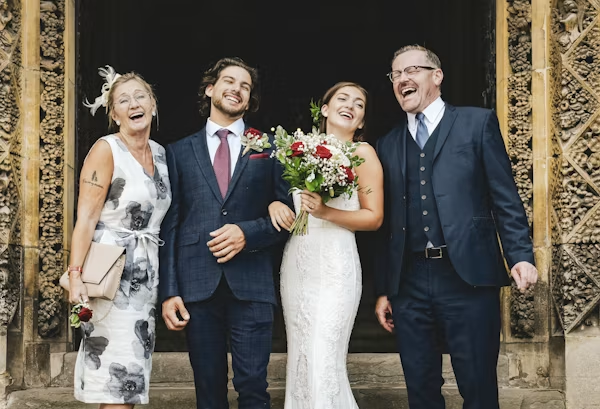
When a parent sees a physical “2” written on that card, they instantly realize their children are not factored into the headcount, preventing awkward follow-up phone calls later.
Shop Etsy for wedding invitation suites.
Frequently Asked Questions About Adults-Only Wedding Invitations
Absolutely not. It is your wedding day, your budget, and your vision. What is rude is being inconsistent. If you invite some friends’ children but exclude others, you will cause hurt feelings. Pick a clear rule (e.g., no children under 18, or immediate family only) and apply it universally.
Don’t panic—this happens to every couple. Pick up the phone and call them directly. Use this exact planner script: “Hi [Name]! We received your RSVP, and we are so excited to celebrate with you. I just wanted to call and clarify that because of our venue’s tight space constraints, we aren’t able to host children. We really hope you and [Spouse] can still make it a date night, but we completely understand if it’s too difficult with childcare!”
As early as possible! If you are planning an adults-only wedding, put the boundary on your wedding website the moment your Save the Dates go out. This gives parents 6 to 9 months to coordinate babysitters, find family care, or budget for a nanny, drastically increasing the chances that they will be able to attend.
This is the most emotionally difficult part of an adults-only wedding, and it happens more often than couples expect. The most important thing is to stay consistent — if you make an exception for one person’s children, you will need to make exceptions for everyone who asks, and the situation will escalate quickly. Acknowledge their frustration with genuine warmth, explain the constraint clearly, and hold the boundary. Most guests, even initially frustrated ones, come around when they understand the rule is universal rather than personal.
Yes, for close family members who have young children — especially siblings, cousins, and your closest friends. A brief heads-up call or text several months before save-the-dates go out gives parents more time to arrange childcare and prevents them from being caught off guard by the formal invitation. It also demonstrates that you thought of them specifically rather than sending an impersonal printed message.
No. You are welcome to offer a reason — venue capacity, budget, or the desire for a late-night adult celebration — but you are under no obligation to justify a personal choice on your own wedding day. A clear, kind statement is sufficient. Over-explaining can actually create more friction by opening the door to negotiation.
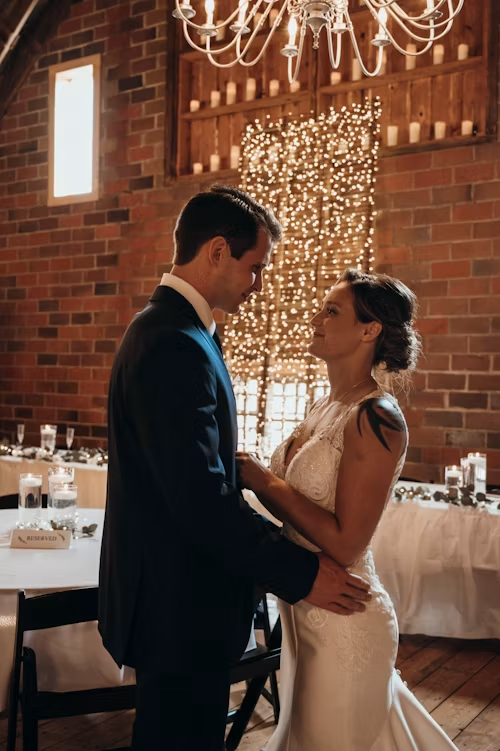
Final Thoughts
Setting this policy for your wedding day can feel uncomfortable, but clear, consistent communication prevents the messy assumptions that create real problems later. By being polite, consistent, and proactive with your wording, your guests will respect your wishes. Most importantly, it allows you to look forward to your celebration knowing your guest list perfectly aligns with the day you’ve dreamed of.
For more guidance on navigating the guest list decisions that feel most complicated, the Wedding Guest List Rules guide covers the parts most couples are never warned about. Includes a free checklist.
This guide will help with what to write in the wedding card. 75 great ideas for what to write in the wedding card.
Chris Ramsay is a wedding planner with over 35 years of experience in hospitality, country clubs, and event planning. She shares practical wedding advice, budget-friendly ideas, and real-world tips to help couples plan stress-free weddings at Well Chosen Weddings. Learn more about her on her about page.